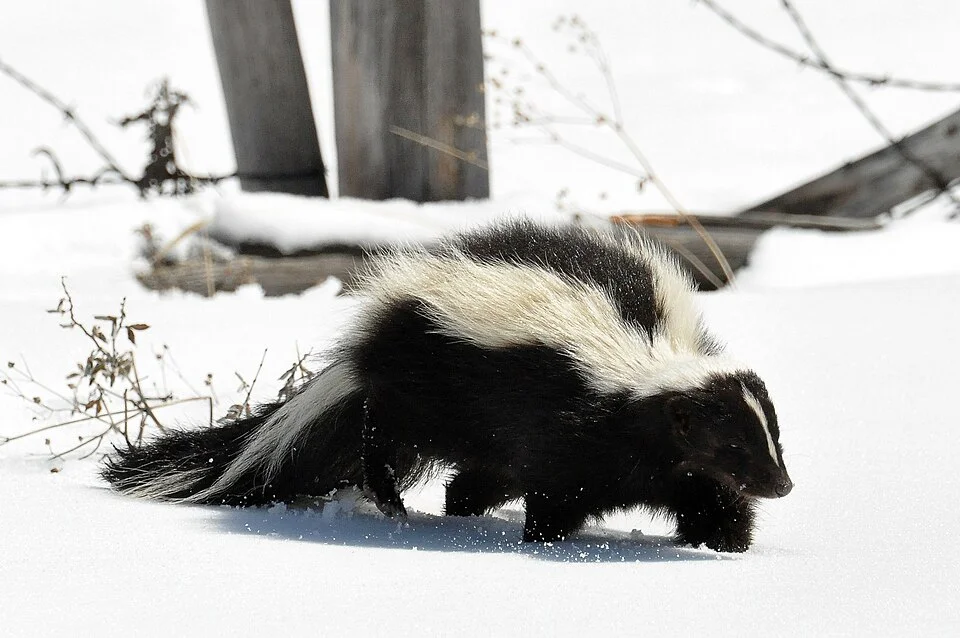
Medium-sized, robust-bodied with a white stripe running along each side of its back, continuing up over the head and down the sides of its bushy tail. Two large scent glands near the base of their tail produce the skunk's notoriously pungent scent, or musk.
Habitat & Range
Found in wooded or brushy areas and farmlands. They prefer rocky outcrops or spaces under large boulders but will use abandoned burrows of other animals when those are unavailable. They are distributed statewide in Texas.
Life History
Striped Skunks are largely nocturnal, leaving dens only in evening and returning by early morning. They put on significant fat by late fall. In Texas they show more activity during winter than summer. They are social creatures, with multiple individuals often sharing a winter den. Their diet is varied, mixing plant and animal matter. Insects form the bulk of their diet, supplemented by reptiles, small mammals, birds, and vegetation. Breeding begins in February or March, with young born in early May. Litters average five offspring. Some females produce two litters annually, though one is more typical. The mother creates a nest of dried grasses and weed stems for the blind, helpless young. Babies stay hidden until they can see and are strong enough to follow her. When threatened, skunks produce a purring sound and may growl if attacked by humans. Before spraying, they perform a defensive display: rising upon their hind feet, lurching forward, stamping both front feet, and clicking their teeth. They have few natural predators, as most avoid the musk. Lifespan is about two years in the wild.
Status, Trends & Threats
No conservation concerns noted. Striped Skunks are distributed statewide in Texas with few natural predators.
Frequently Asked Questions
What should I do if a skunk sprays me?
Skunks spray a pungent musk from large scent glands near the base of their tail as a defense mechanism. They typically give warning signs first, including rising on their hind feet, stamping their front feet, and clicking their teeth.
How many young do skunks have?
Litters average five offspring. Breeding begins in February or March, with young born in early May. Some females may produce two litters annually.
Are skunks active in winter?
Yes, in Texas striped skunks show more activity during winter than summer. They put on significant fat by late fall and multiple individuals often share a winter den for warmth.