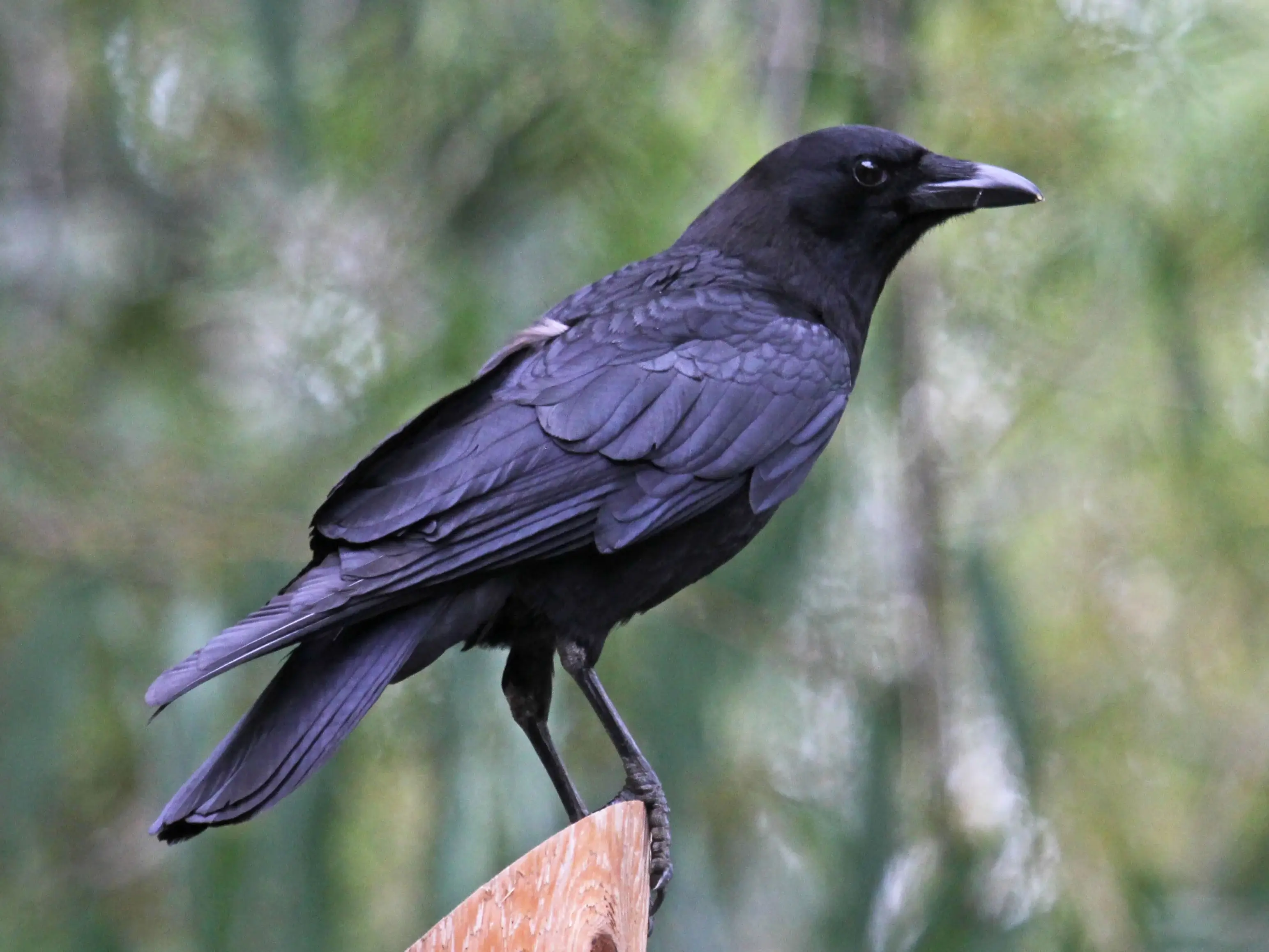
Adults are entirely black with a long, heavy bill, sometimes showing a purplish sheen on the highlights of the plumage. The tail is rounded rather than wedge-shaped, and the familiar call is the well-known caw, caw. They are about 17.5 inches in length.
Habitat & Range
Found in a variety of habitats with trees. In winter, they concentrate in agricultural areas within river floodplains. When not nesting, crows often travel and roost in groups, which can create conflicts where large roosts occur in cities.
Life History
Crows are omnivorous, foraging for seeds, acorns, corn, fruit, insects, carrion, nestling birds, and small mammals and reptiles. They are remarkably intelligent, using tools, stealing from other birds, and snatching food from dog dishes. A pair builds twig nests high in tree crotches, laying 3–9 eggs that hatch in 16–18 days, with young fledging in 20–40 days.
Status, Trends & Threats
Listed as a common permanent resident statewide. The American crow is one of the birds most susceptible to West Nile virus, which typically kills crows within a week of contracting the disease and caused severe declines in some areas when it arrived in 1999.
Frequently Asked Questions
Are American crows legal to hunt in Missouri?
Yes, crows are a game bird with managed hunting seasons in Missouri. Consult the current Wildlife Code of Missouri for season dates, bag limits, and permit requirements.
Where should I look for crows when hunting in Missouri?
Crows occupy a variety of habitats with trees statewide. In winter, focus on agricultural areas in river floodplains where they gather in large groups.
What do crows eat that helps with locating them?
They feed on seeds, acorns, corn, fruit, insects, carrion, and nestling birds. Their intelligence means they follow other birds to locate food and scavenge roadkill.