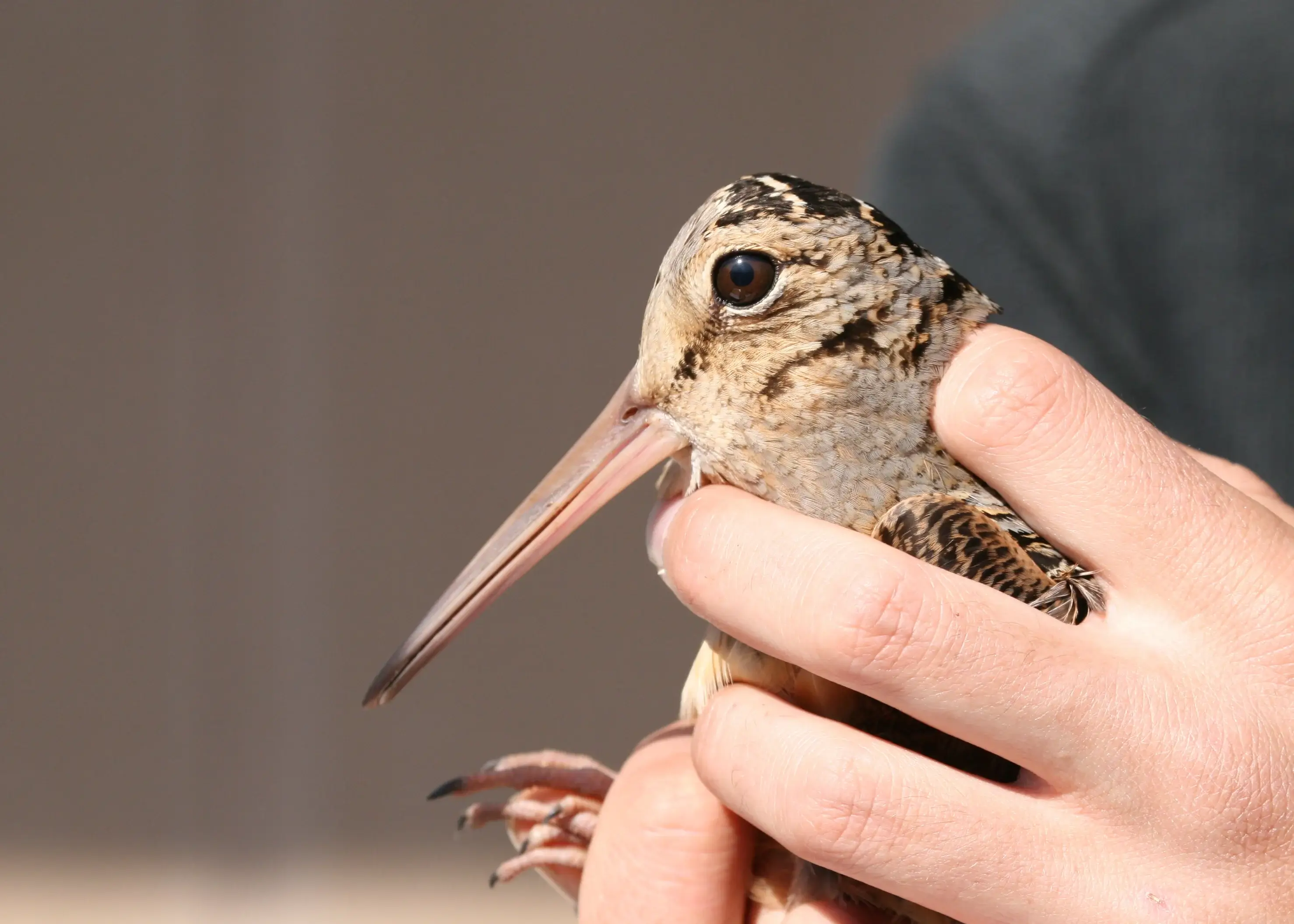
Also known as: Timberdoodle, big-headed snipe, bog sucker, bog bird, night partridge, night peck, hookumpake, Labrador twister, whistler, big-eyes
A short-necked terrestrial shorebird with a long bill whose large eyes sit high on its head. When flushed, its short wings make a startling whirring sound. Dappled in cinnamon, gray, and buff, it resembles a squat sandpiper but lives in woodland openings rather than shorelines.
Habitat & Range
Woodcocks inhabit open woodlands, young woodlands near water, moist pastures and fields, and forested floodplains. They are most active at dawn and dusk.
Life History
They probe soft ground with a flexible bill tip for earthworms, cutworms, and crane fly larvae. Males perform elaborate sky-dance courtship displays in spring — spiraling upward to 200–300 feet, then plummeting with a chirping, gurgling sound. Females alone tend ground nests (1–12 eggs), and young are mobile shortly after hatching.
Status, Trends & Threats
Classified as a common migrant and uncommon summer resident mainly in the Bootheel. Population may be decreasing across the continent as early-successional woodlands mature into closed-canopy forest.
Frequently Asked Questions
Can American woodcock be hunted in Missouri?
Yes, woodcock is a game bird in Missouri. Hunters should consult the current Wildlife Code of Missouri for season dates, bag limits, and regulations.
When are woodcock present in Missouri?
Woodcock occur in Missouri from February through November, with peak numbers in March and again from late September through mid-October during migration.
Where should I look for woodcock to hunt?
Focus on moist, open habitats at dusk — young woodlands near water, moist pastures, shrub swamps, and forested floodplains. They are crepuscular, so twilight hours offer the best opportunity.