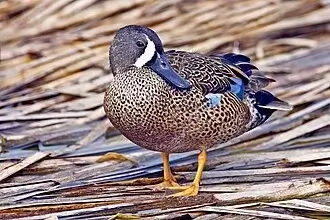
The blue-winged teal is a small dabbling duck featuring a dark gray head with a white crescent on males, while the female is brown with yellow legs, a dark eye line, and a whitish spot between the bill and the eye. Males produce high peeps and females give high-pitched quacks. This swift flyer reaches about 16 inches in length and is a popular quarry among duck hunters.
Habitat & Range
Found statewide at marshes, ponds, and lakes across Missouri, these ducks are commonly seen in open country wetlands. Like other dabblers, they can launch directly upward from water without a running start.
Life History
Blue-winged teal are surface feeders that forage on vegetation such as sedges, seeds, and small invertebrates in shallow water, rarely diving. Hens alone handle parental care, building concealed nests on dry ground near water and laying 10-13 eggs that hatch in roughly 24 days, with ducklings taking to water immediately. They are relatively early migrants, departing for wintering grounds along the Gulf of Mexico, Texas, and as far as South America.
Status, Trends & Threats
Listed as a common migrant and locally uncommon summer resident in marshes in Missouri. Most have migrated south by the time regular waterfowl hunting season opens. State and federal game laws regulate harvest to maintain healthy populations.
Frequently Asked Questions
Why is blue-winged teal hunting season early in Missouri?
Blue-winged teal are among the earliest migrating ducks, with most having moved south by the time regular waterfowl season opens. This is why there is often a special early teal season in September, allowing hunters to target these birds before they depart for wintering grounds along the Gulf Coast and South America.
How can I identify a blue-winged teal while hunting?
Blue-winged teal are small dabbling ducks, about 16 inches in length. Males have a dark gray head with a distinctive white crescent, while females are brown with yellow legs and a whitish spot between the bill and eye. Their high-pitched peeps and quacks, along with their small size and swift flight, help distinguish them from other ducks.
What habitat should I look for when hunting blue-winged teal in Missouri?
Blue-winged teal prefer shallow marshes, ponds, and lakes in open country wetlands. They are surface feeders that forage in very shallow water for vegetation, seeds, and small invertebrates, so shallow wetlands with good plant growth are ideal hunting locations.