Also known as: Giant Canada goose
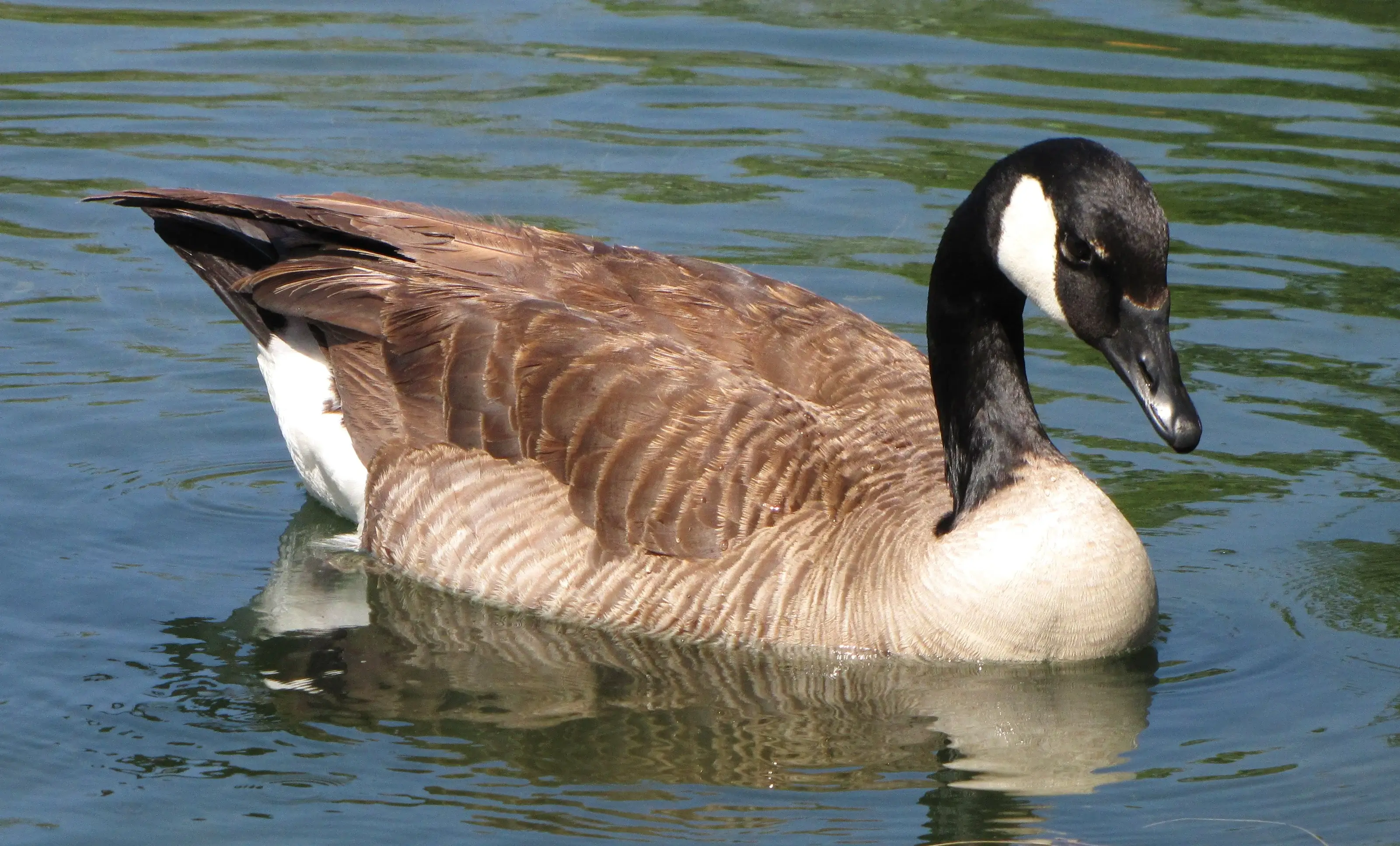
Canada geese have brownish-gray bodies, black heads and long necks, black legs and webbed feet, with a white chin patch extending along the sides of the head to the ears. The giant subspecies is larger, has a deeper voice and paler belly. They fly in V-shaped chevrons during migration. Length ranges from 24 to 48 inches.
Habitat & Range
Common statewide on ponds, lakes, and marshes. They are found near nearly any water body surrounded by large open grassy areas, including city parks, golf courses, and so on.
Life History
Canada geese are herbivore grazers, feeding on aquatic vegetation, tender grasses, and various other plants and seeds. Pairs bond for life and nest on the ground near water, laying 3–8 eggs incubated for 25–28 days. Goslings can walk and swim within days of hatching, remaining with parents until after spring migration.
Status, Trends & Threats
Once close to extinction, the giant Canada goose subspecies has made an amazing recovery through restoration efforts begun in Missouri in the late 1940s and 1950s. They are now listed as a locally common summer resident and common migrant and winter resident statewide.
Frequently Asked Questions
Are Canada geese legal to hunt in Missouri?
Yes, Canada geese are popular among waterfowl hunters with over 2.5 million harvested annually in North America. They fall under federal Migratory Bird Treaty Act protections and state regulations.
When are Canada goose hunting seasons in Missouri?
Hunting seasons vary by year. Consult the MDC Hunting and Trapping section and current regulations for specific season dates and bag limits.
What is the best habitat for hunting Canada geese in Missouri?
Focus on ponds, lakes, and marshes with surrounding large open grassy areas. Canada geese are common statewide on nearly any water body that provides feeding and resting areas.