Also known as: mushrat (historical Ozark dialect variant)
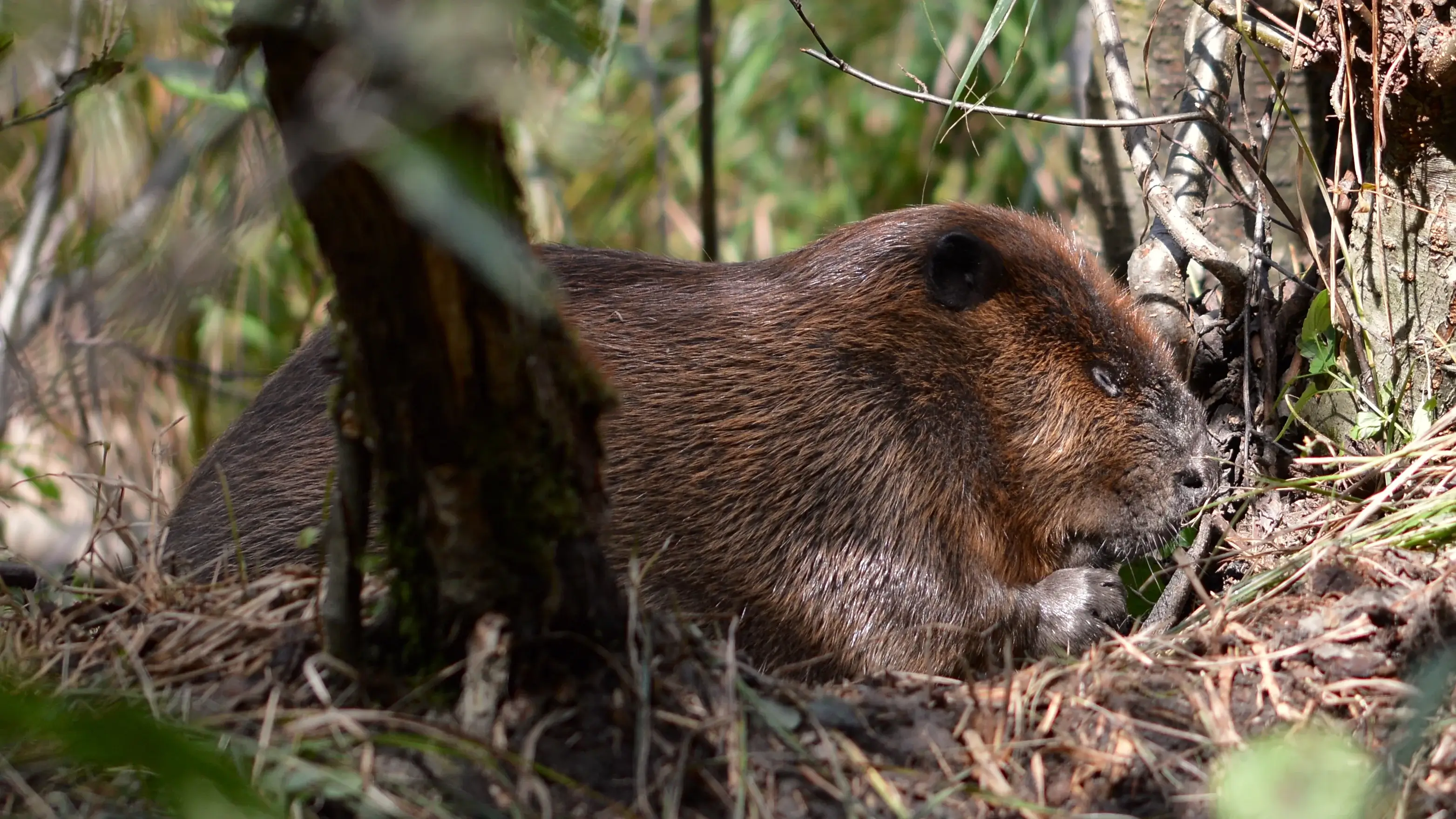
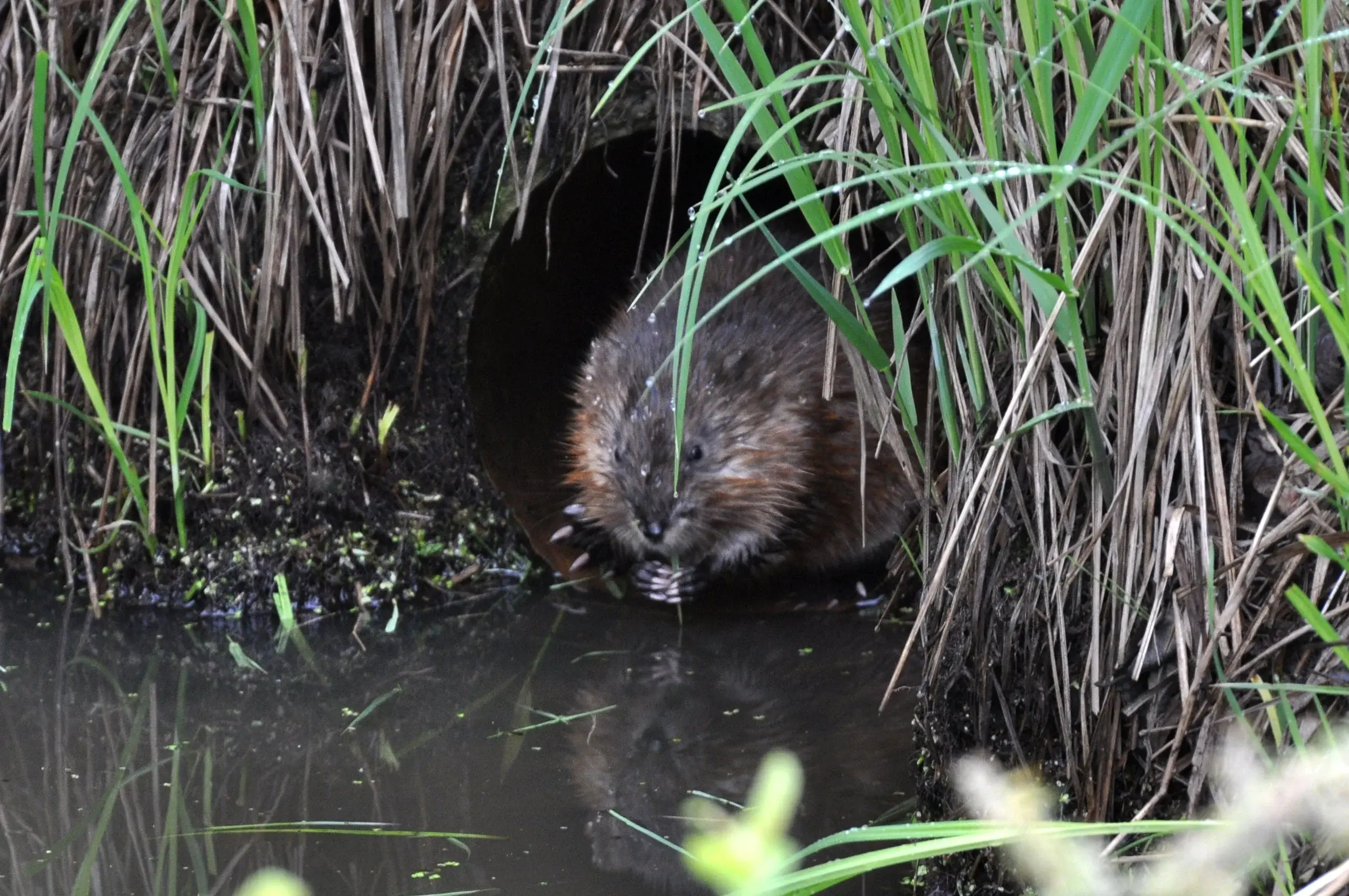
The common muskrat is a medium-sized mammal with short front legs, larger hind feet, and a narrow, vertically flattened, scaly tail slightly shorter than its head and body length. Its back is blackish brown, sides are lighter brown with a reddish tinge, and underparts fade to white on the throat. Musk glands produce a mild, inoffensive odor.
Habitat & Range
Muskrats are semiaquatic and inhabit marshes, sloughs, streams, rivers, ponds, and lakes. They dig bank dens or construct houses from vegetation in shallow water, accessed by underwater tunnels.
Life History
They are omnivores, eating rootstocks, stems, seeds, clover, corn, and aquatic plants, plus in Ozark streams they consume clams, snails, crayfish, fish, and frogs. Breeding runs from late winter to mid-September, with 2–3 litters per year of 4–7 young that wean at 3–4 weeks.
Status, Trends & Threats
The species is listed as common, and long-term population trend data from various surveys suggest populations are stable. In Missouri, the main management approach is regulating harvest through trapping seasons.
Frequently Asked Questions
Is muskrat trapping legal in Missouri?
Yes, muskrats are classified as a furbearer in Missouri and may be trapped during the prescribed trapping season. A valid Missouri trapping permit is required.
What is the best trapping method for muskrats in Missouri?
Muskrats are commonly trapped using body-grip traps (such as 110 Conibears) placed at den entrances, runways, or feeding platforms. Foothold traps can also be effective when set in shallow water.
What is the muskrat trapping season in Missouri?
Muskrat trapping season in Missouri generally runs from mid-November through March. Exact dates are set annually by the Missouri Conservation Commission and should be verified in the current regulations.