Also known as: Feral swine, razorbacks, Russian wild boar, Eurasian wild boar
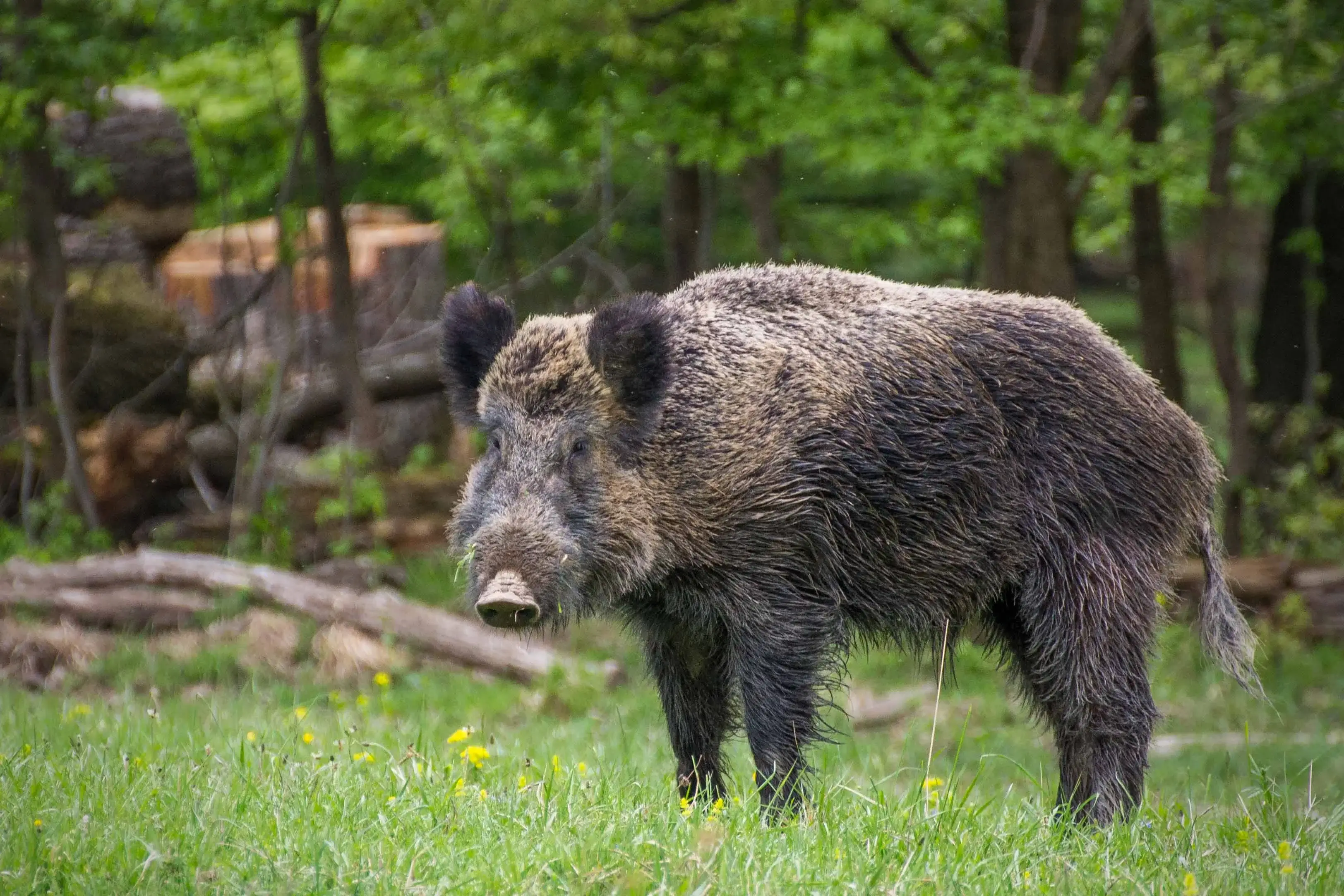
Feral hogs in Missouri are hybrids blending genetics from Eurasian wild boar and domestic breeds, displaying varied colors including gray, red, black, blond, spotted, and belted. They have small eyes, large triangular ears, and a long snout ending in a round nose, with a thick coat of coarse bristly hair that can be erected along the spine. Males develop a thick cartilage shield over the shoulders and four sharp tusks that grow continuously. Height reaches 3 feet at the shoulder, length up to 5 feet, and weight up to 400 pounds, though most sows average 110 pounds and boars 130 pounds.
Habitat & Range
Populations are small, isolated, and typically in remote rugged terrain. Feral hogs require abundant water and spend considerable time near seeps, ponds, and streams. They occur potentially statewide but are mainly established in the southern third of Missouri.
Life History
They are opportunistic feeders with a keen sense of smell, heavily foraging on acorns and competing with deer and turkey, and eating eggs of ground-nesting birds, reptiles, amphibians, small mammals, and even deer fawns. Breeding can happen anytime; females mature by 6 months and produce two litters of 1-7 piglets every 12-15 months, with populations capable of doubling in four months. They live to age 4-5 on average (occasionally 8) and are mostly nocturnal, with sows and piglets traveling in groups called sounders.
Status, Trends & Threats
Status: Invasive. Problems escalated in the 1990s from escapes and intentional releases on public land. The USDA estimated feral swine cause about $1.5 billion annually in U.S. damages and control costs. Their rooting, wallowing, and feeding erode soil, reduce water quality, damage crops and hay fields, destroy sensitive natural areas, and can spread disease to humans, pets, and livestock.
Frequently Asked Questions
Can feral hogs be hunted year-round in Missouri?
In Missouri, feral hogs are classified as an invasive species, and there is no closed season for hunting them on private land. However, hunters should be aware that landowners must provide permission, and certain regulations apply. The MDC strongly encourages hunters to report feral hog sightings and participate in eradication efforts, as the goal is complete elimination from the state.
Is there a bag limit for feral hogs in Missouri?
There is no bag limit for feral hogs in Missouri. As an invasive species, the goal is eradication, and hunters are encouraged to harvest as many as possible. However, it is illegal to transport live feral hogs, and all harvested hogs should be handled with caution due to disease concerns.
Why does Missouri want to eliminate feral hogs?
Feral hogs cause devastating ecological and agricultural damage estimated at $1.5 billion annually nationwide. They destroy native habitats through rooting and wallowing, compete with native wildlife for food like acorns, prey on ground-nesting birds and small mammals, degrade water quality, damage crops and hay fields, and can transmit diseases to humans, pets, and livestock.