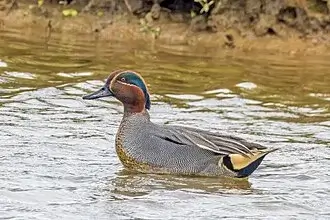
The male green-winged teal has a rusty head, gray body, green eye-to-neck band, tan breast, and a vertical white stripe on the upper breast. The female is brown-bodied with a green wing patch, small bill, dark eye line, and whitish undertail coverts without spots. This relatively small dabbling duck can take flight by springing directly into the air from the water's surface, reaching about 14 inches in length.
Habitat & Range
Green-winged teal inhabit marshes, swamps, ponds, lakes, reservoirs, streams, and flooded bottomlands across Missouri. They prefer moderately dense aquatic vegetation interspersed throughout the water and forage in shallow, vegetated water.
Life History
As dabbling ducks, they feed on seeds, vegetation, and invertebrates by tipping up rather than diving. They breed in Canada, Alaska, and the northern Rockies, wintering in Mexico and the western and southern United States, with Missouri seeing them during spring and fall migration.
Status, Trends & Threats
Described as a common migrant in Missouri, not known to breed in the state, and a common winter resident on unfrozen marshes in southern Missouri. Their numbers are carefully managed by state, federal, and international conservation agencies as popular game birds.
Frequently Asked Questions
Why is the green-winged teal so popular for hunting in Missouri?
Green-winged teal are highly popular for hunting due to their fast flight, abundance during migration, and good-tasting meat. They are described as the bantams of the duck tribe and offer challenging wing shooting opportunities.
Where can I hunt green-winged teal in Missouri?
Green-winged teal can be found in marshes, swamps, ponds, lakes, reservoirs, streams, and flooded bottomlands throughout Missouri. They prefer areas with moderately dense aquatic vegetation and are common winter residents on unfrozen marshes in southern Missouri.
When are green-winged teal present in Missouri?
Green-winged teal are common migrants during spring and fall migration seasons in Missouri. They are also common winter residents on unfrozen marshes in southern Missouri, providing hunting opportunities throughout the colder months when water remains open.