Also known as: Dabbling duck, puddle duck
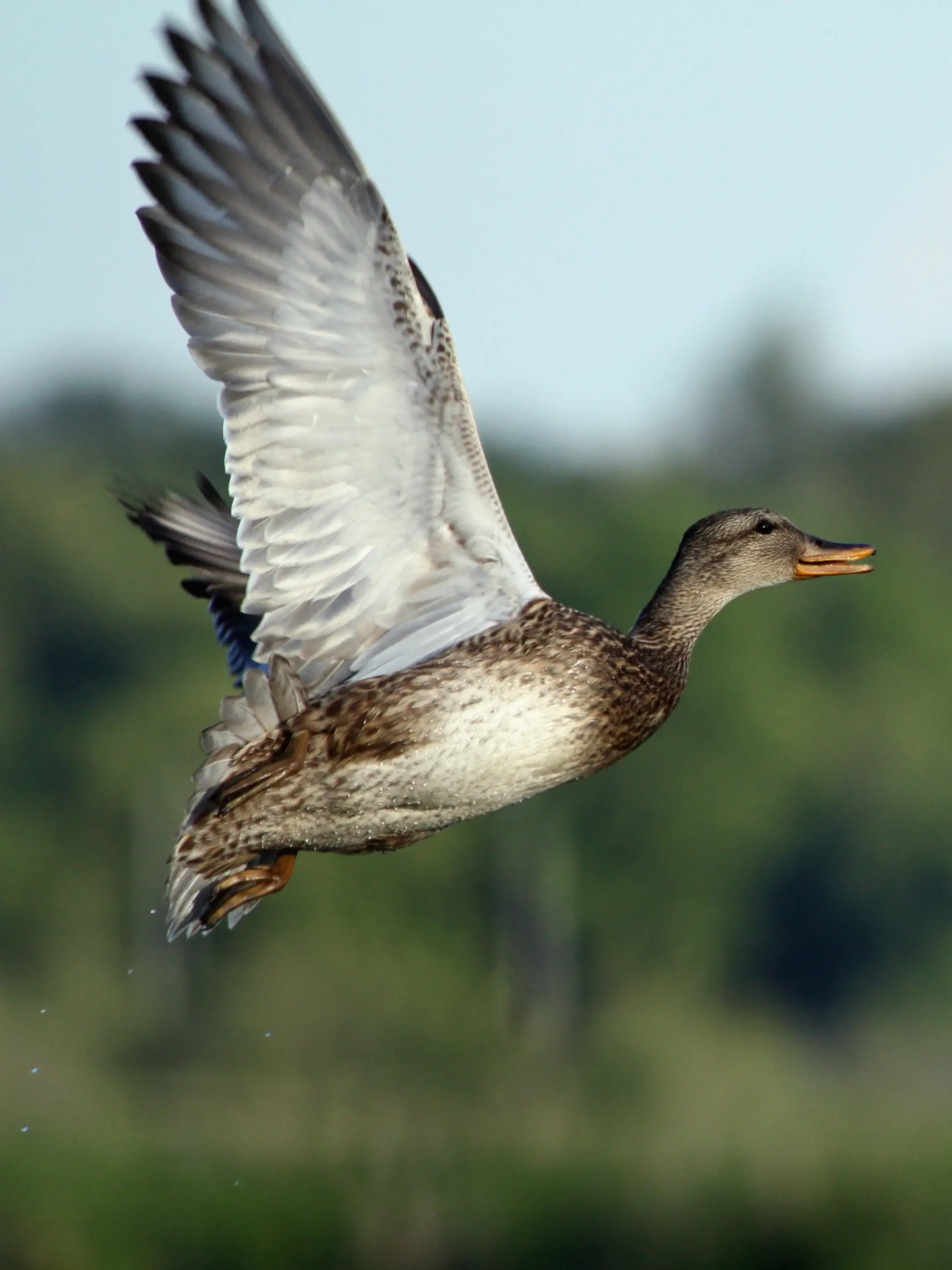
Adult males have a green head, chestnut breast, gray body, black back, and a white-bordered blue wing patch. Females are brownish with an orange bill marked by dark saddle patterns. Males vocalize with a loud graeb-graeb or whistle, while females produce a descending quack.
Habitat & Range
Common migrant found statewide on lakes, rivers, ponds, and marshes. Locally uncommon as a summer resident nesting along lakeshores and marshes, and very common in winter even during severe cold.
Life History
Mallards are dabbling ducks that feed on seeds, grass, aquatic vegetation, and invertebrates by tipping forward in shallow water. Pairs form in fall; females build ground nests lined with down and lay 1–13 eggs with a 23–30 day incubation period. Chicks can follow their mother within a day of hatching.
Status, Trends & Threats
Described as a common transient and winter resident and uncommon summer resident in Missouri. They hybridize readily with closely related duck species, producing offspring that can be difficult to identify.
Frequently Asked Questions
Do mallard males quack?
No, only females produce the classic descending quack. Males make a loud graeb-graeb or whistle instead.
Where can I hunt mallards in Missouri?
Mallards are found statewide on lakes, rivers, ponds, and marshes. Key conservation areas include Duck Creek CA, Upper Mississippi CA, Coldwater CA, and H. F. Thurnau CA.
How do I distinguish mallards from similar duck species?
American black ducks are much darker with a greenish bill and purple wing patch. Other similar dabbling ducks include northern shoveler, gadwall, northern pintail, green-winged teal, blue-winged teal, ring-necked duck, and wood duck.