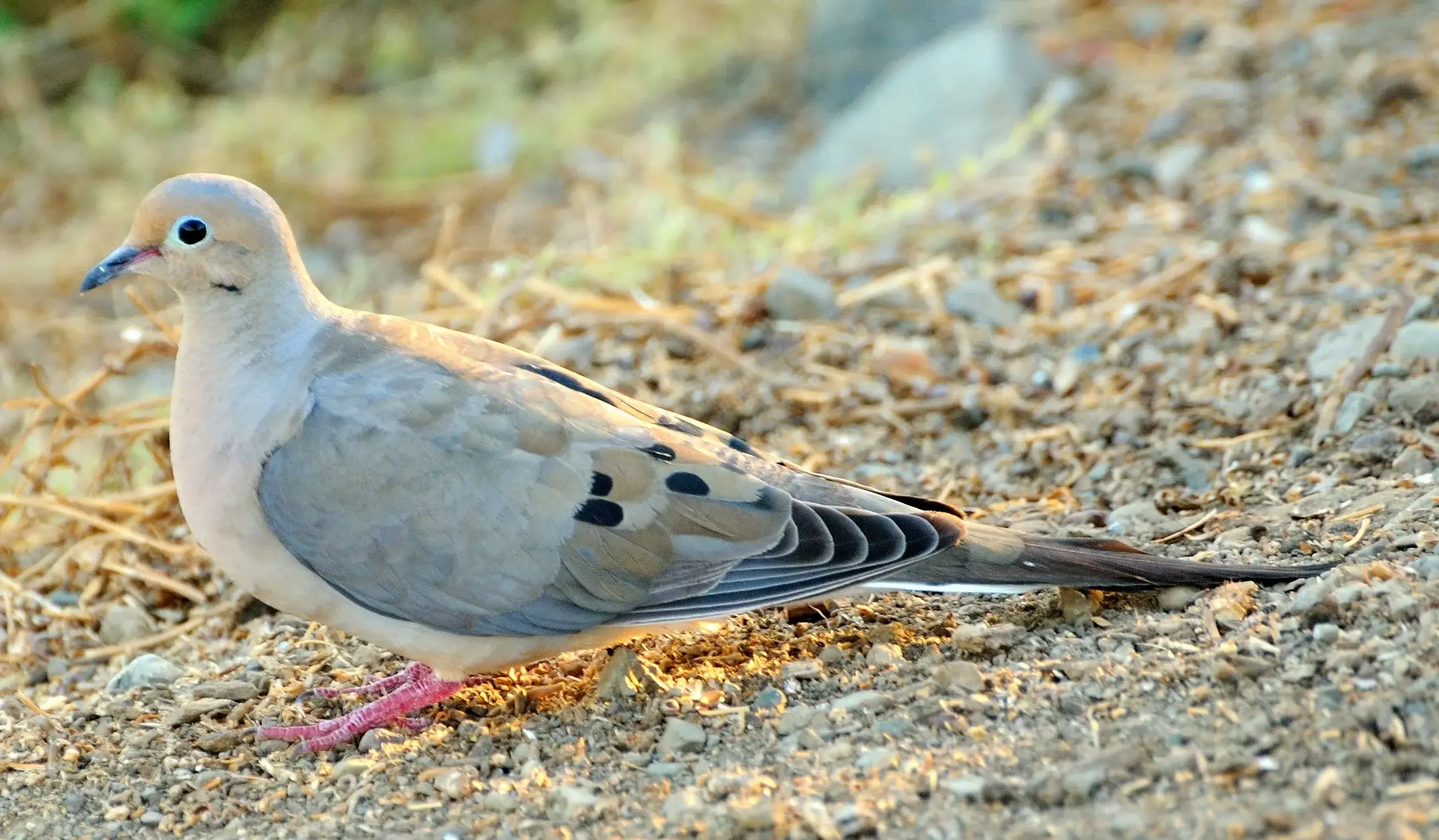
The mourning dove is a slender bird with a rounded head and smooth-looking breast, gray-brown plumage with black wing spots, and a long tapered tail with white tips. Its song is a soft, inflected coo-AH-oo, oo, oo, ooo. It measures about 12 inches in length from bill tip to tail tip.
Habitat & Range
Mourning doves are found statewide in Missouri, primarily in crop fields, around farms, and in yards. They proved adaptable to humans and benefit from agricultural practices that create bare ground and seed-producing plants.
Life History
Their diet consists mainly of seeds and some insects, gathered while walking on the ground; they swallow seeds whole and let their muscular crops process them. Courtship begins in April, with typically 2 eggs laid per nest, incubated for 14 days, and pairs may attempt up to 7 nestings between late March and early September.
Status, Trends & Threats
The species is a common migrant and summer resident statewide, and a common winter resident in the southeast but uncommon elsewhere. In heavily hunted areas, doves may accidentally ingest fallen lead shot while pecking for seeds, causing lead poisoning.
Frequently Asked Questions
Is mourning dove hunting popular in Missouri?
Yes — dove hunting is described as a popular and rewarding sport and many consider doves good eating. Certain MDC conservation areas are managed specifically for doves.
What regulations apply to hunting mourning doves in Missouri?
Hunters should consult the current Wildlife Code of Missouri for specific season dates, bag limits, and regulations.
How can landowners support mourning dove habitat?
Many landowners enjoy hunting mourning doves and consider their habitat needs when planting and harvesting crops. MDC conservation areas are also managed with dove habitat in mind.