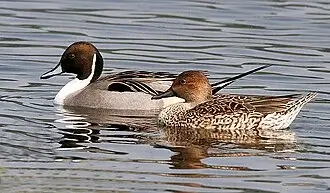
The northern pintail is a dabbling duck named for its elongated, tapered tail. Males feature a brown head, white breast, and gray body with a long, slender white neck and a narrow white streak extending up onto the head. Females are brownish with a bronze speculum and solid gray bill. The species is a common migrant in Missouri distinguished by its long neck and uniform head coloring.
Habitat & Range
Northern pintails forage in shallow water on marshes, ponds, and lakes, and also commonly visit crop fields or stubble. They are found statewide in Missouri, with peak numbers during March in spring and October through November in fall migrations.
Life History
Like other dabblers, pintails feed near the surface in shallow water, straining aquatic vegetation, sedges, seeds, and invertebrates through their bills, and they eat grain in crop fields during winter. Nests are built on the ground in brushy or grassy places typically away from water, and young hatch covered with down and can walk soon after. They can live beyond 22 years in the wild, with migration flights occurring at night at nearly 50 mph.
Status, Trends & Threats
Global numbers declined nearly 75 percent since the middle 1960s, with habitat loss being a primary concern. Spring plowing destroys nests, and lead shot ingestion is a threat as their long necks let them reach pool bottoms. Numbers typically drop after drought years and rebound during wet years, requiring careful hunting management.
Frequently Asked Questions
Where is the best place to hunt northern pintail in Missouri?
Northern pintails are found statewide in Missouri on marshes, ponds, and lakes, particularly in shallow water habitats. They also commonly visit crop fields and stubble fields to feed on waste grain, making agricultural areas near wetlands prime hunting locations during migration.
When is the best time to hunt northern pintail in Missouri?
Peak northern pintail numbers occur in March during spring migration and October through November during fall migration. They are a common migrant in Missouri during these periods, and hunters should consult the MDC Waterfowl Hunting Digest for current season dates.
What is the population status of northern pintails and how does it affect hunting?
Northern pintail populations have declined nearly 75 percent since the 1960s primarily due to habitat loss, which has resulted in more restrictive hunting regulations. Populations fluctuate with drought and wet years, so hunting regulations are adjusted accordingly through state and federal management.