Also known as: Common raccoon, North American raccoon
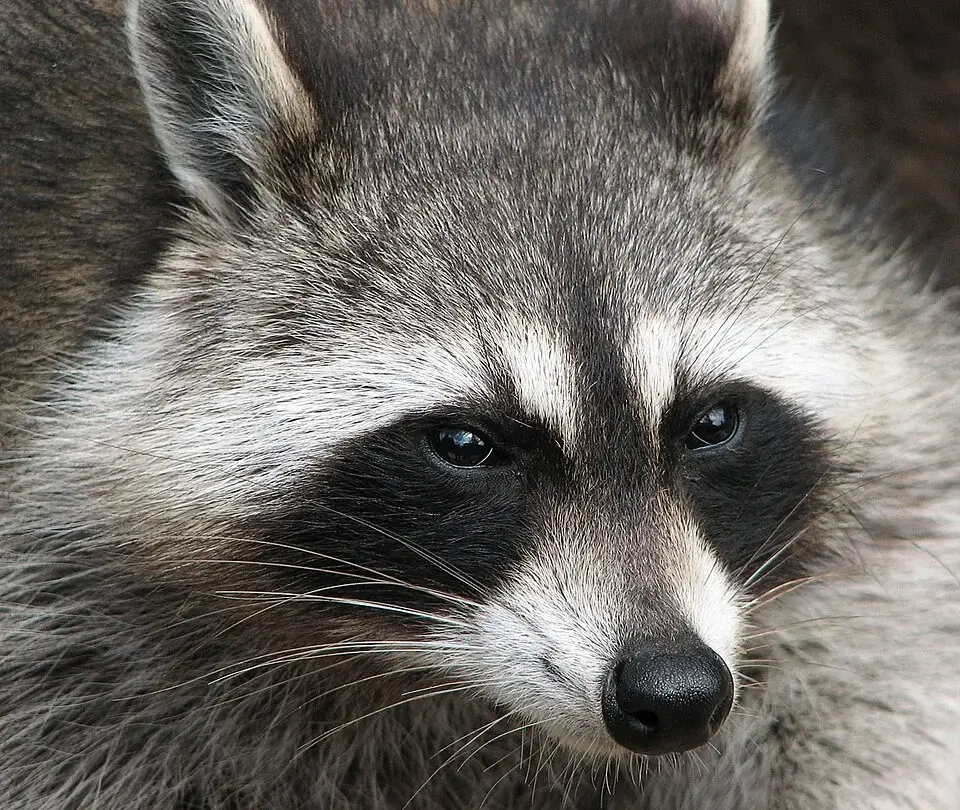
The raccoon is a medium-sized, stocky mammal recognized by a prominent black mask over the eyes and a heavily furred, ringed tail roughly half the length of its head and body. It has a pointed muzzle, short pointed ears, and rather long, slender feet with naked soles. Total length ranges from 21.5 to 38 inches, with a 5 to 12 inch tail and weight of 6 to 25 pounds.
Habitat & Range
Raccoons prefer timbered habitat near water and are also found in urban and suburban areas. They den in hollow trees, caves, rocky crevices, abandoned woodchuck burrows, and many other locations throughout Missouri.
Life History
Raccoons are omnivorous, consuming both plant and animal matter including persimmons, grapes, corn, acorns, crayfish, fish, insects, frogs, bird eggs, and small mammals. Most breeding occurs in February with litters typically born in April or early May. They are mostly nocturnal, usually solitary, expert climbers and good swimmers, and become dormant or inactive in winter.
Status, Trends & Threats
Missouri's raccoon population reached a low point in the 1940s and has been rebounding ever since, aided by regulated hunting and trapping. In numbers harvested, raccoons outrank all other Missouri furbearers. They are a valuable fur and game species, and the Wildlife Code permits landowners to control nuisance raccoons.
Frequently Asked Questions
Can raccoons be hunted in Missouri?
Yes, raccoons are a popular furbearer game species in Missouri. They may be hunted and trapped during established seasons as outlined in the Wildlife Code of Missouri. They rank as the most harvested furbearer in the state.
What is the best time of day to hunt raccoons in Missouri?
Raccoons are primarily nocturnal, so they are most active at night. Many Missouri hunters pursue raccoons at night with the aid of dogs, which track and tree the animals.
What should I do if raccoons are causing damage on my property?
The Wildlife Code of Missouri permits landowners to control raccoons that become a nuisance. They only rarely cause extensive damage to corn, gardens, or chickens, but if issues arise, contact the Missouri Department of Conservation for guidance.