Also known as: Cross fox (color phase), silver fox (color phase)
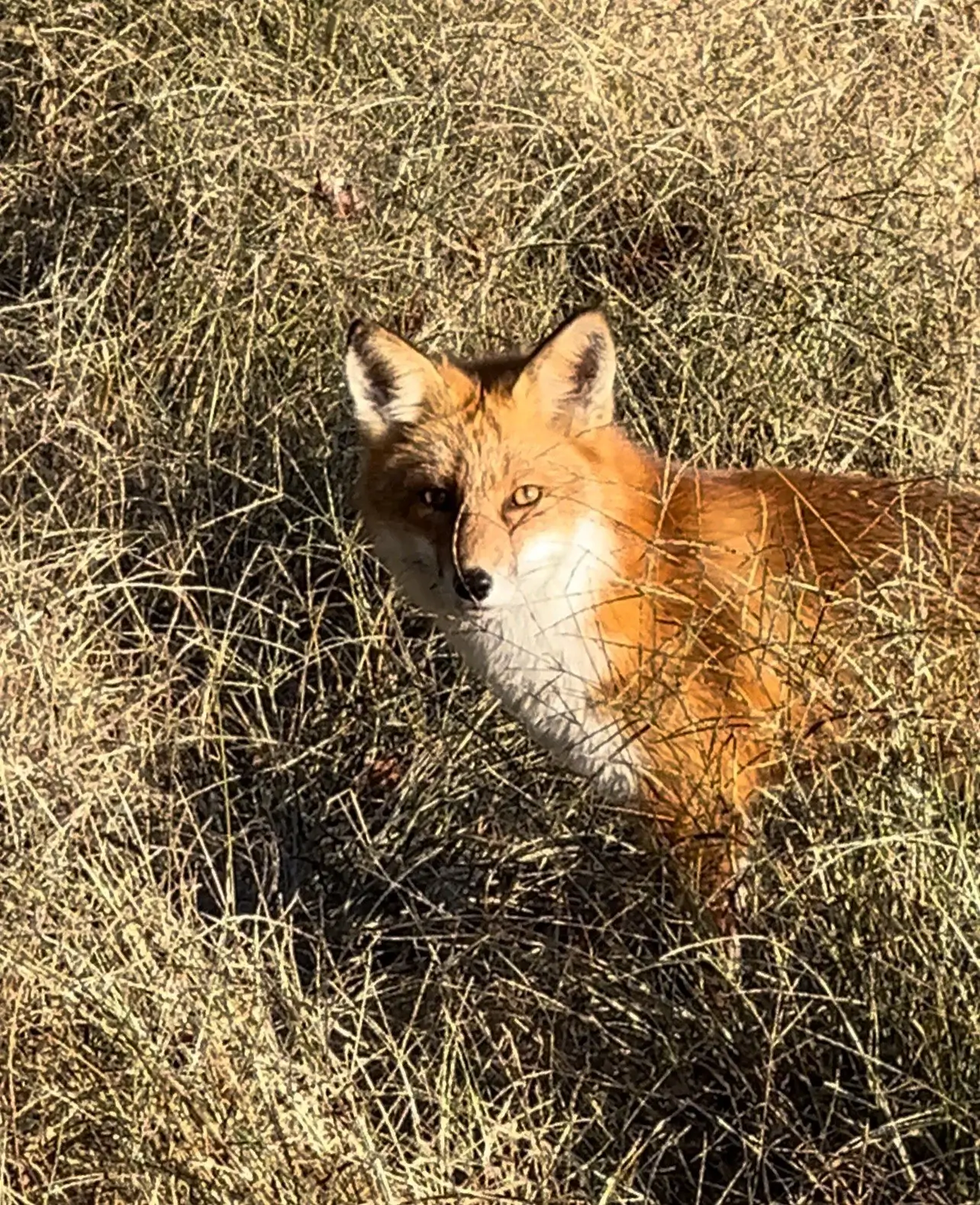
The red fox appears doglike with an elongated, pointed muzzle; large, erect ears; moderately long legs; and a long, bushy tail with a white tip. Upperparts are reddish-yellow, the legs and feet are black, and the cheeks, throat, and belly are whitish. It differs from the gray fox by having a tail circular in cross-section and a tawny iris instead of dark brown.
Habitat & Range
Red foxes prefer the borders of forested areas and adjacent open lands, avoiding dense and extensive forests. They occur statewide in Missouri but are more common in the northern and western sections. During most of the year they sleep on the ground in sheltered spots, using dens only during breeding season.
Life History
Rabbits, mice, and rats form the bulk of the diet, along with other small mammals, wild birds, and insects, with about 18 percent of diet volume consisting of livestock and poultry, though some of this is carrion. Mating occurs from late December through March peaking in January and February, with one annual litter of 4 to 7 kits born in March or April. They are chiefly nocturnal but may be active at dawn and dusk, and when food is plentiful they kill more than needed and cache the surplus.
Status, Trends & Threats
The statewide red fox population has been in a long-term decline but recently seems to have stabilized. The reasons for the decline are unknown but could be a result of competition with coyotes and bobcats, fluctuations in the food supply, or disease and parasite outbreaks. They are trapped for their fur, used for trimming, scarves, coats, jackets, and hats.
Frequently Asked Questions
Can red foxes be hunted in Missouri?
Yes, red foxes may be hunted and trapped during the established furbearer season in Missouri. They are managed as a furbearer species, and their fur is valued for trimming, scarves, coats, jackets, and hats.
Why has the red fox population declined in Missouri?
The statewide red fox population has been in a long-term decline, though it recently seems to have stabilized. Possible causes include competition with coyotes and bobcats, fluctuations in the food supply, or disease and parasite outbreaks. The exact reasons remain unknown.
What is the difference between a red fox and a cross fox?
The cross fox is a color phase of the red fox, not a separate species. It has a dark band down the back and across the shoulders, forming a cross-like pattern. Silver foxes, another color variant, are typically raised on fur farms. All are the same species, Vulpes vulpes.