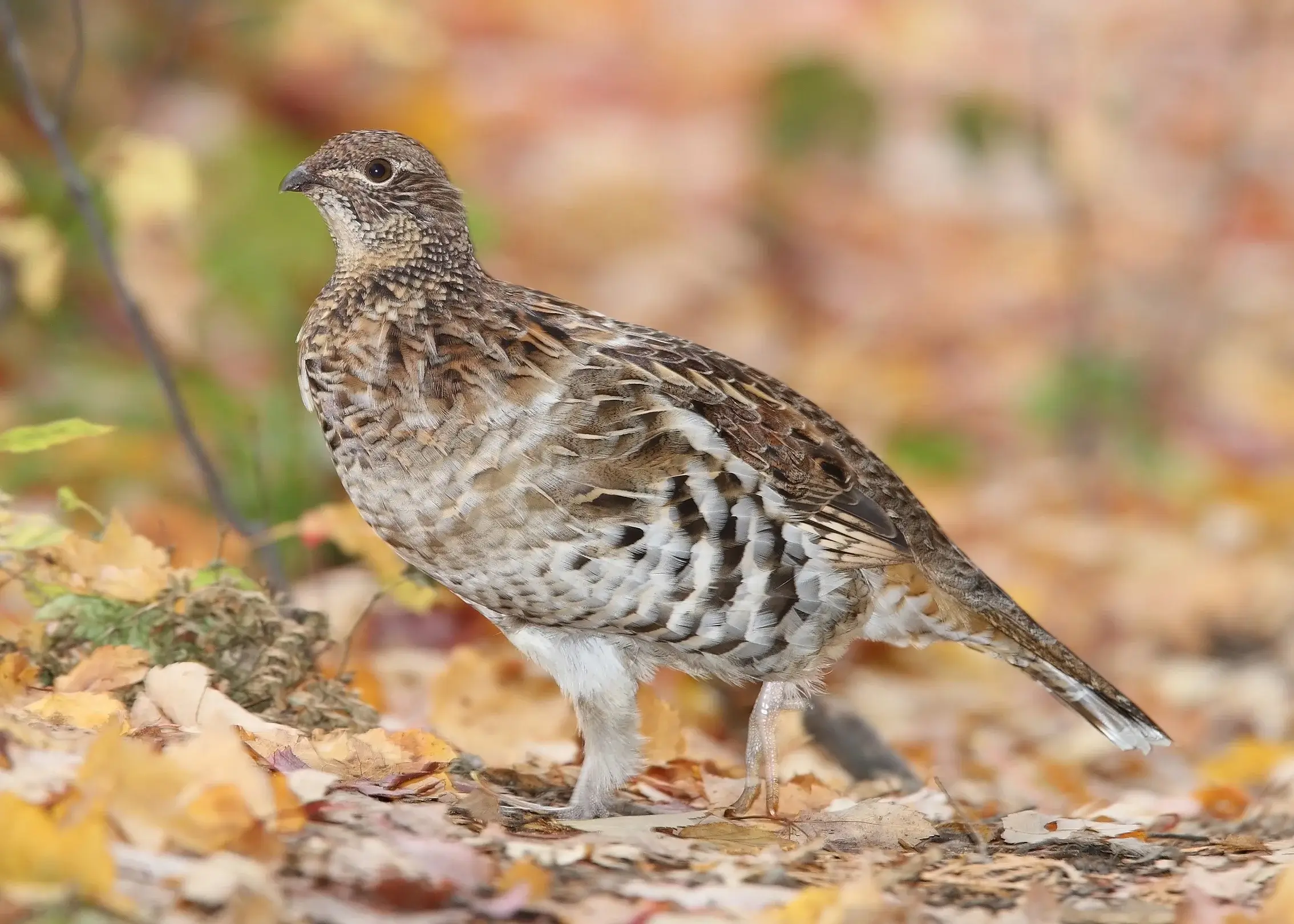
This chickenlike bird comes in brown, rufous, and gray color morphs, with streaked upperparts and barred underparts. Both sexes have a dark neck ruff and a subtle crest on the head. Adults measure about 17 inches in length from bill tip to tail tip. Females generally show darker barring than males, and females also lack the dark band found on central tail feathers.
Habitat & Range
Ruffed grouse inhabit forested landscapes with thick, brushy undergrowth of shrubs or saplings — early successional habitat created by disturbances like fire that open the woodland canopy. In Missouri, they occur as rare and local permanent residents statewide in appropriate habitat, primarily in the Ozark border and eastern Ozarks.
Life History
Primary foods include green leafy plants, seeds, and fruits such as wild grapes, sumac berries, and acorns; chicks rely heavily on insects for protein. Males perform courtship displays at dawn and dusk in April, standing on a fallen log and making rapid forward wingbeats to produce a low, accelerating drumming sound. Females are ground-nesters, typically laying about 6–8 eggs.
Status, Trends & Threats
Listed as a Species of Conservation Concern in Missouri, where it is a rare permanent resident with restoration efforts ongoing in east-central parts of the state. Habitat loss is a primary reason that grouse numbers have declined, as they require different specific habitat types across their seasonal cycle.
Frequently Asked Questions
Can ruffed grouse be hunted in Missouri?
Ruffed grouse are a game bird in Missouri, but given their Species of Conservation Concern status and designation as a rare permanent resident, hunters should consult the current Wildlife Code of Missouri for season dates, bag limits, and regulations before hunting.
Where can I find ruffed grouse in Missouri?
Most ruffed grouse occur in the Ozark border and eastern Ozarks, in forested landscapes with thick, brushy undergrowth. However, they are rare and local statewide, so encounters are limited compared to northern states.
What conservation efforts support ruffed grouse in Missouri?
MDC works to assist landowners in providing the habitat grouse need for food, cover, breeding, drumming, nesting, and overwintering. Habitat improvements for grouse also benefit many other wildlife species.