Also known as: Blue goose
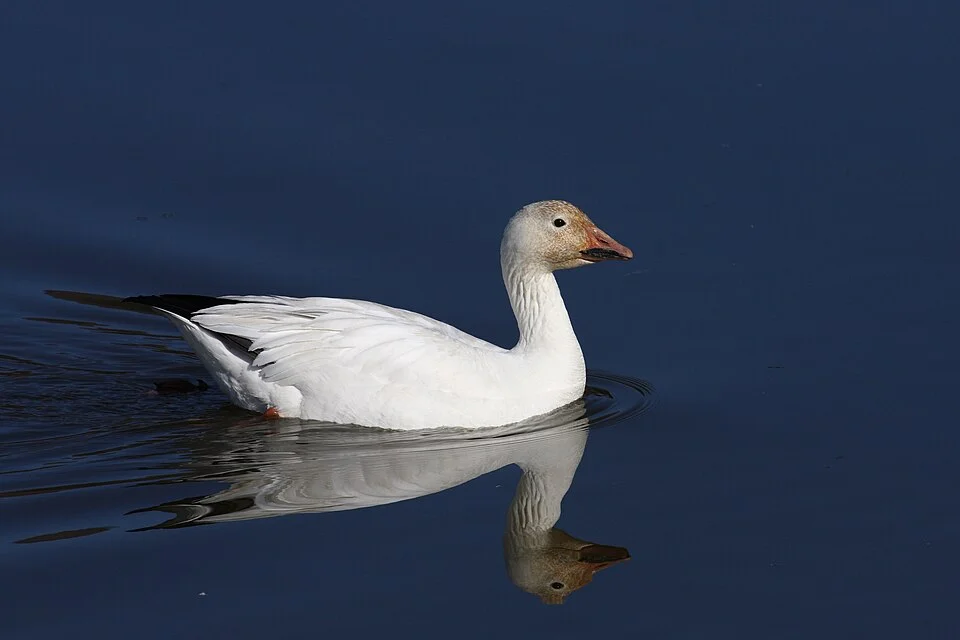
The snow goose occurs in two color morphs — white and blue (grayish brown) — which were once treated as separate species. Both forms have pink bills with a black lipstick marking and pink legs and feet. The white morph is mostly white with black wingtips, while the blue morph has a white head and neck with a grayish-brown body.
Habitat & Range
Snow geese are common in marshes, rivers, lakes, and crop fields throughout Missouri. They almost always appear in groups, with white forms typically outnumbering blue ones.
Life History
In winter, snow geese feed by digging up marsh plant roots and have expanded into eating leftover grain in crop fields and agricultural waste such as rice, wheat, and corn. Pairs form during their second spring migration and stay together for life. They nest on arctic tundra ground, and young are able to migrate south by 6–8 weeks old.
Status, Trends & Threats
Listed as a common migrant and uncommon winter resident in Missouri. Populations of snow goose and Ross's goose have risen to historically high levels, causing overgrazing of arctic nesting grounds. Wildlife agencies have been trying to control the population size through various methods.
Frequently Asked Questions
Is snow goose hunting popular in Missouri?
Yes, snow geese are a popular quarry of waterfowl hunters. Because populations have risen to historically high levels, liberalized bag limits may apply.
When can snow geese be found in Missouri for hunting?
They are present as a common migrant during fall and spring migrations and as an uncommon winter resident. Peak migration periods offer the best hunting opportunities.
Where should hunters look for snow geese in Missouri?
Look for marshes, rivers, lakes, and crop fields statewide. Notable areas with traditional stopover habitat include Eagle Bluffs Conservation Area, Loess Bluffs NWR, Otter Slough CA, and Duck Creek CA.