Also known as: Common skunk, polecat
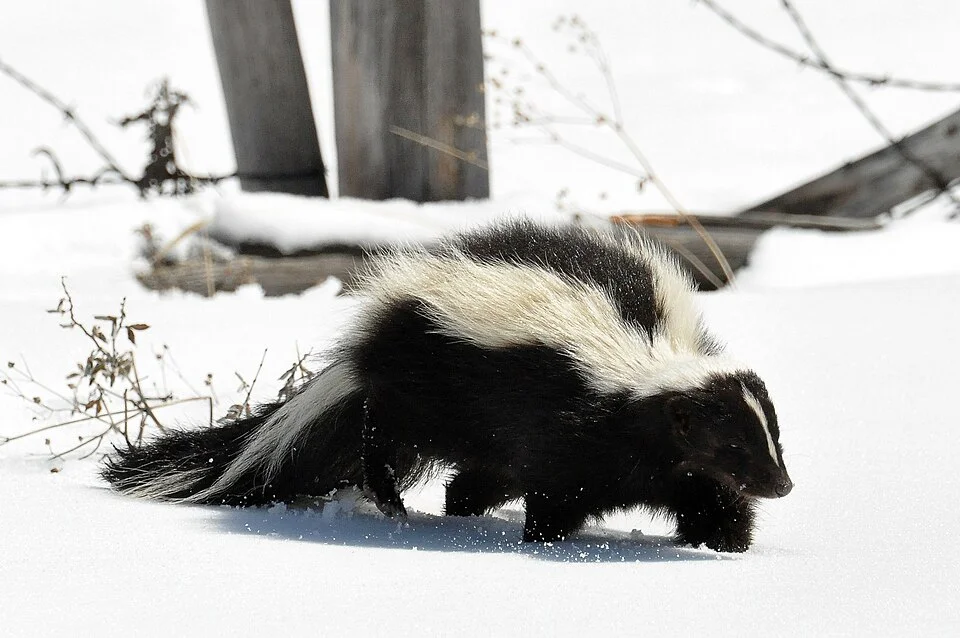
The striped skunk is a cat-sized mammal with black fur and a long, prominent tail, typically bearing white stripes that run down the head and split into two stripes along each side of the body. Stripe patterns are unique to each individual. Its well-known defense mechanism involves a foul-smelling musk secreted by glands at the base of the tail that can be aimed and sprayed, and prior to spraying, skunks typically warn intruders by stamping their feet and holding the tail high in the air.
Habitat & Range
Striped skunks are found statewide in Missouri. They prefer forest borders, brushy field corners, fencerows, and open grassy fields broken by wooded ravines and rocky outcrops, typically where permanent water is nearby. Their dens are usually in the ground but may also occur in stumps, caves, rock piles, farm buildings, wood piles, or haystacks.
Life History
Skunks are omnivorous and forage mostly at night, with insects including bees, wasps, and larvae preferred in spring and summer, along with mice, rats, moles, shrews, ground squirrels, young rabbits, and carrion. Breeding begins in February with a single litter of 4 to 6 young born from early May to early June. As cold weather arrives they spend more time in dens, becoming drowsy and sleeping intermittently, but they do not truly hibernate.
Status, Trends & Threats
Striped skunks are listed as common in Missouri. They may be trapped and hunted during designated seasons under the Wildlife Code of Missouri. No population declines, major threats, or conservation concerns are noted for this species.
Frequently Asked Questions
Can striped skunks be hunted in Missouri?
Yes, striped skunks may be trapped and hunted during designated seasons under the Wildlife Code of Missouri. They are managed as a furbearer species and are common throughout the state.
How can I avoid being sprayed by a skunk while hunting?
Skunks typically warn intruders by stamping their feet and holding the tail high in the air before spraying. If you see these warning signs, slowly back away. Skunks are not aggressive and prefer to avoid confrontation.
What should I do if skunks are a nuisance on my property?
The Missouri Department of Conservation provides guidance on skunk control for nuisance situations. Skunks may be controlled by landowners under the Wildlife Code, and MDC has a specific Skunk Control resource available for managing unwanted skunks around properties.