Also known as: North American opossum, common opossum
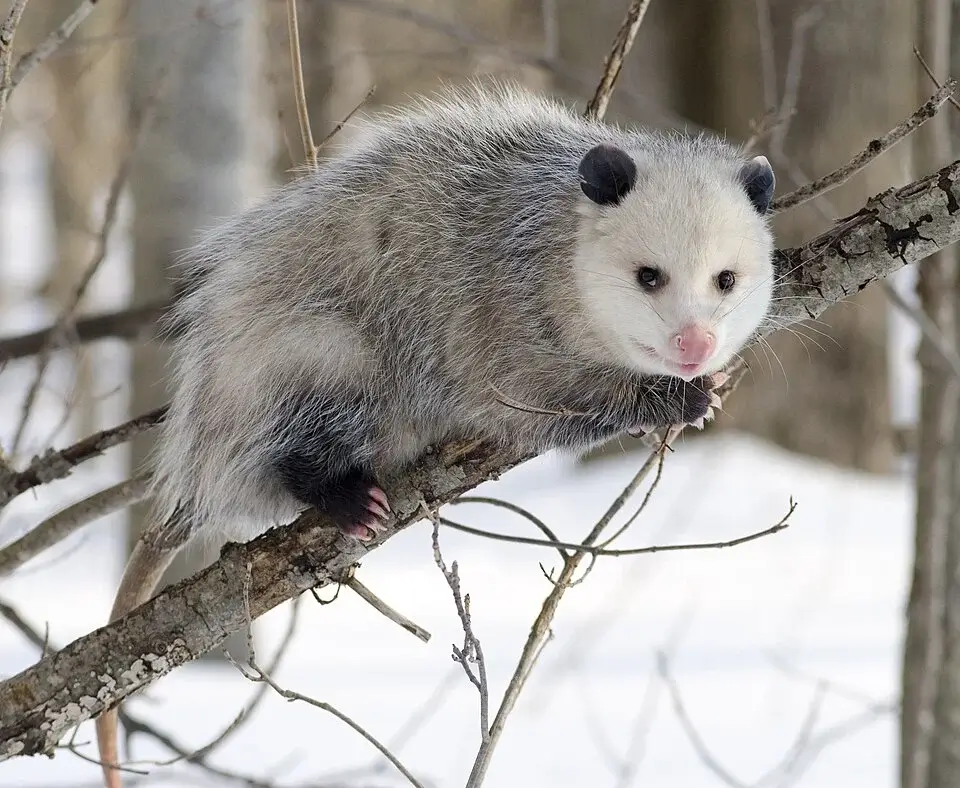
The Virginia opossum is a medium-sized mammal with coarse grayish-white fur, a sharp muzzle with a pink nose, prominent naked ears, short legs, and a long, scaly, grasping tail. It is North America's only native marsupial, with females possessing a fur-lined belly pouch for carrying young. Total length ranges from 24 to 34 inches and weight from 4 to 15 pounds.
Habitat & Range
Opossums prefer wooded areas mostly near streams, especially near farms as opposed to densely wooded areas. They are well-adapted for climbing, using an opposable toe on each hind foot and a prehensile tail, and are also common in urban and suburban areas throughout Missouri.
Life History
Opossums eat a wide variety of foods but prefer animal matter including insects, carrion, rabbits, squirrels, and mice, along with fruits like grapes and persimmons. Breeding begins in early February with a gestation of only 12 to 13 days. They are nocturnal, and their famous 'playing possum' reaction is a defensive adaptation where they roll over, become limp, and let their tongue hang out. Lifespan in the wild is only about 2 years.
Status, Trends & Threats
Opossums are common and abundant in Missouri, with populations stable and increasing slightly over time. They fall prey to foxes, coyotes, bobcats, and owls. They are managed through regulated hunting and trapping seasons under the Missouri Wildlife Code, and their fur is used in coats.
Frequently Asked Questions
Can opossums be hunted in Missouri?
Yes, opossums may be hunted and trapped during established furbearer seasons under the Wildlife Code of Missouri. Their fur is used in coats, and some people also bake and eat opossum.
Are opossums beneficial to have on my property?
Yes, opossums benefit farmers by feeding on many insects considered injurious to crops and by consuming carrion, providing an important ecosystem function. They are highly adaptable and generally not aggressive.
What is the best way to hunt opossums in Missouri?
Opossums are nocturnal, so hunting at night is most effective. They are often taken incidentally by trappers targeting other furbearers. Hunting with dogs at night can also be productive.