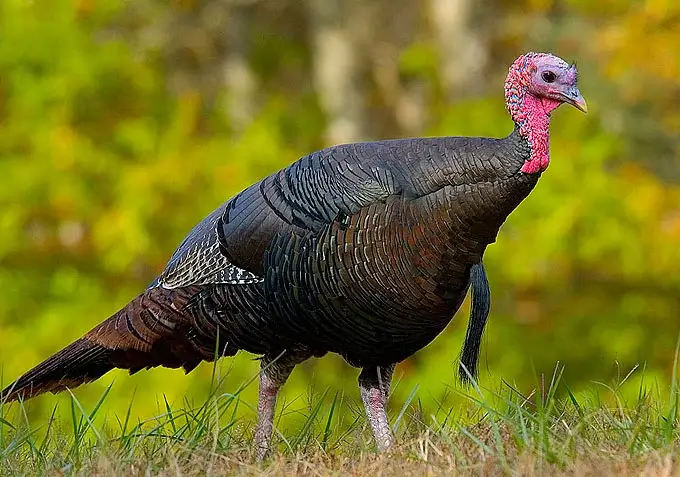
Adult males are very large and dark with a bare, red and blue head featuring red wattles, along with long legs and bronzy iridescent feathers. Males, and some females, have a tuft of hairlike feathers called a "beard" on the breast. Females are smaller and less iridescent. Turkeys are best known for gobbling but produce many other vocalizations as well.
Habitat & Range
Found statewide in Missouri, most abundantly in the Ozark Border, Glaciated Plains, and Ozark natural divisions. They thrive in areas with a good mix of open and forested landscapes.
Life History
Wild turkeys eat a huge variety of foods including acorns, insects, seeds, berries, and agricultural grains, varying with the season. In spring, males gobble and strut to attract females; after mating, females lay about 10–14 eggs in shallow ground nests and incubate them for about a month, with young leaving the nest within a day of hatching.
Status, Trends & Threats
Missouri's turkey population rebounded from around 2,500 birds to several hundred thousand through conservation efforts over about 75 years. However, populations have declined recently throughout much of the eastern U.S., with loss or degradation of nesting and brooding habitat as a likely leading cause.
Frequently Asked Questions
What is the wild turkey hunting season in Missouri?
Missouri has both spring and fall turkey hunting seasons. The spring season typically runs in April and May, while the fall season occurs in October and November. Exact dates vary by year and zone.
What are the bag limits for wild turkey in Missouri?
Missouri allows two turkeys per spring season (both bearded birds, with restrictions on how many can be taken per day), and fall season limits vary. Hunters should consult the current Missouri Spring Turkey Hunting Regulations for exact limits.
What is the best habitat for turkey hunting in Missouri?
Wild turkeys are found most abundantly in the Ozark Border, Glaciated Plains, and Ozark natural divisions. They thrive in areas with good mast production (acorns), a mix of open fields and forests, and access to water.