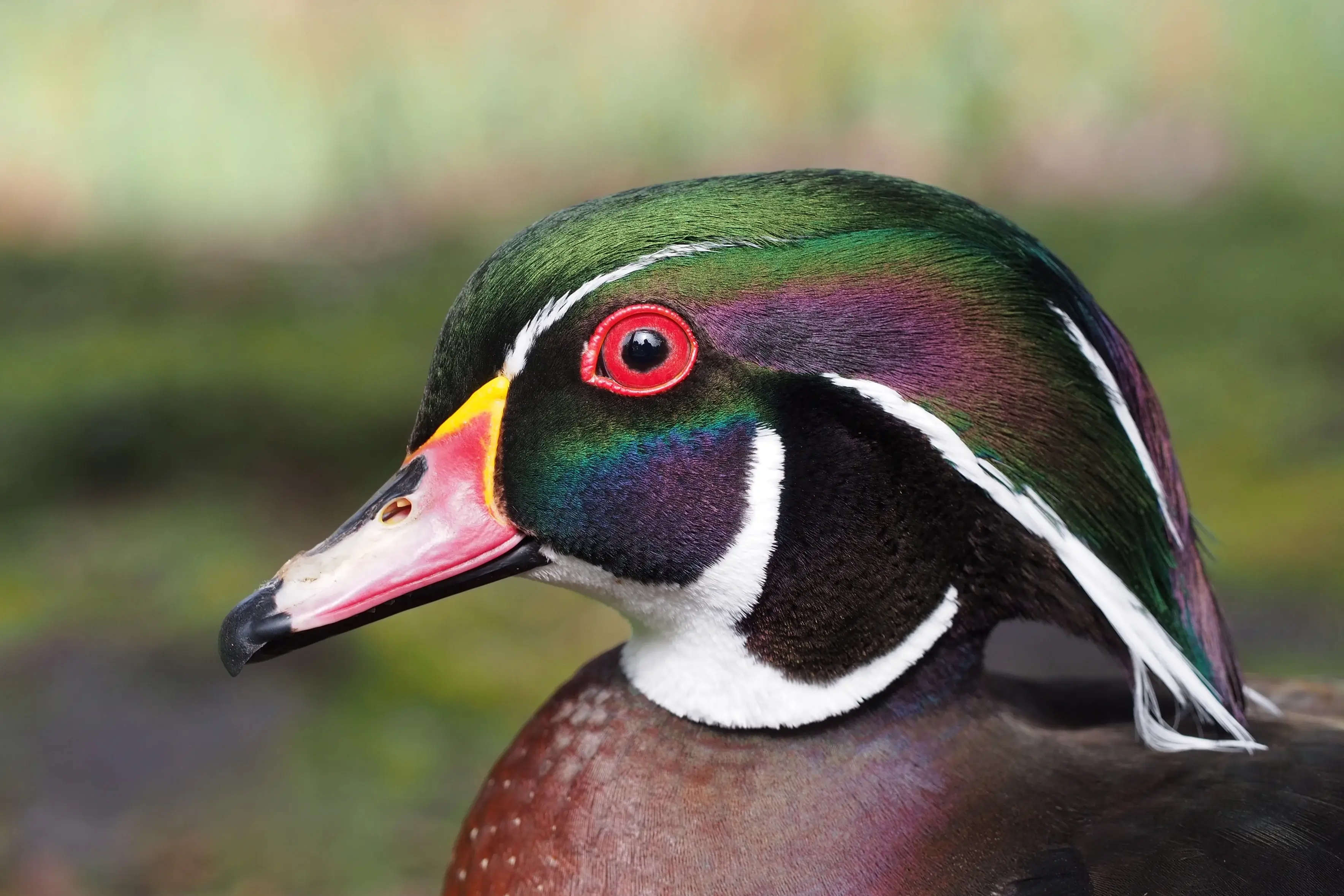
The wood duck is among the most strikingly colored waterfowl, with the male displaying chestnut, tan, green, red, and white plumage. The brownish female is identified by a white eye ring that tapers to a point behind the eye. In flight, males have a blocky head shape and long, square tail, with wings producing a rustling, swishing sound. The female's flight call is a haunting rising whistle frequently heard in forested wetlands.
Habitat & Range
Found statewide in Missouri, wood ducks are common migrants that forage in swamps, lakes, backwaters of streams, and ponds. They nest in tree cavities usually near water, although often up to a mile away.
Life History
Wood ducks form pairs in midwinter and usually have two broods a year, with clutches of 6-16 eggs incubated for 28-37 days. Young jump from the nest cavity the day after hatching, even from heights up to 60 feet, and their diet consists of seeds, berries, leaves, nuts like acorns, and aquatic invertebrates.
Status, Trends & Threats
Habitat loss and overhunting caused severe population declines by the late 1800s, but federal and state conservation laws helped rescue this species. Artificial nesting boxes have aided recovery, and populations are now stable. They are a common transient and summer resident, and an uncommon winter resident in the southeast.
Frequently Asked Questions
What is the best habitat to hunt wood ducks in Missouri?
Wood ducks are commonly found in forested wetlands, swamps, lakes, and backwaters of streams throughout Missouri. They readily use artificial nesting boxes placed near water, which can concentrate local populations for hunting opportunities.
When is wood duck hunting season in Missouri?
Wood ducks are common migrants in Missouri and are typically in season during the regular waterfowl hunting season in fall and winter. Hunters should check the Missouri Department of Conservation's current Waterfowl Hunting Digest for exact season dates and bag limits.
How can I identify a wood duck in flight while hunting?
In flight, male wood ducks have a blocky head shape and long, square tail, with wings that produce a distinctive rustling, swishing sound. The female's flight call is a haunting rising whistle, which is frequently heard in forested wetland habitats.