Also known as: American black bear
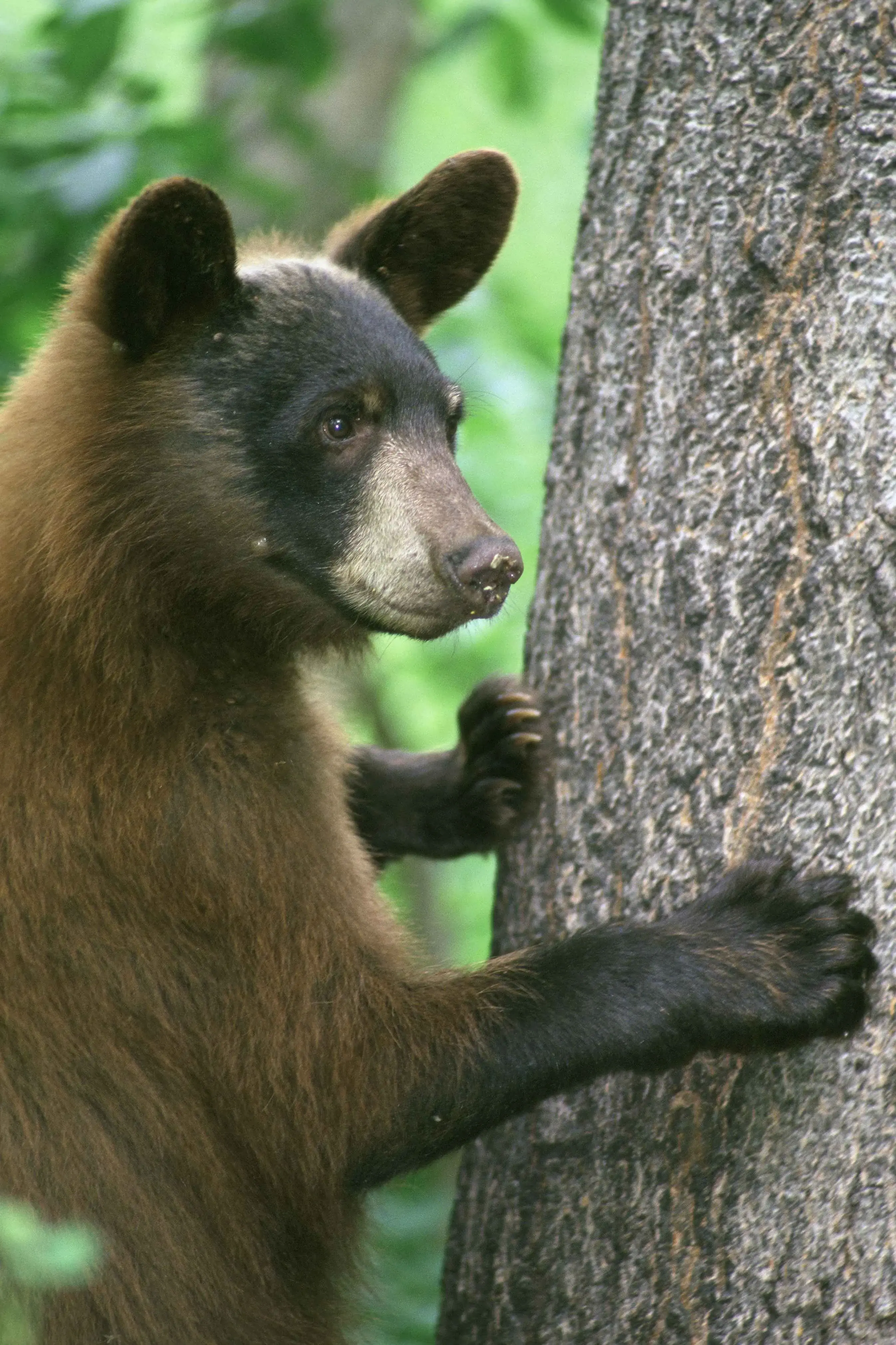
Scientific Name:Ursus americanus Adult Size:Length 5-6 feet; height (on all fours) 2-3 feet; weight 100-300 pounds (female), 200-700 pounds (male) Diet:Acorns, berries, carrion, corn, fish, frogs, fruits, grasses, grubs, honey, insects, larvae, nuts, peanuts, reptiles, roots, seeds, small mammals, soybeans and wheat Classification: Game Species (Big Game).Bear hunting regulations Distribution:Common in coastal and mountain regions of the state; uncommon in the Piedmont region Did you know: The largest Black bear ever recorded weighed 880 pounds and was in Craven County, NC! The black bear is the only bear species found in North Carolina or anywhere in the eastern United States. The successful comeback of the American black bear in North Carolina represents one of wildlife management's greatest achievements. Black bears were once restricted to remote areas and reached very low population levels in the mid-1900s. Today, black bears are found approximately 60% of the total land area of North Carolina. The black bear is an omnivore with a diet of both plants and animals. It varies in color: in North Carolina, the black bear is usually black with a brown muzzle and sometimes a white patch on its chest, commonly referred to as a chest blaze. In other areas of North America, black bears can be a very common brown color or a more rare blue and white. All bear species have five toes on each foot and each toe has a sharp curved claw enabling the bear to feed on insects and grubs in decaying logs. Black bears rely mostly on their sense of smell and hearing due to poor eyesight, but are adept at climbing, running, swimming and digging.They have been clocked at speeds of 35 miles per hour over short distances. Bears prefer large expanses of uninhabited woodland or swampland with dense cover. In the east, lowland hardwoods, swamps and pocosins, provide good bear habitat. Recent research has shown bears to be much more adaptable to habitat changes than previously thought and some bears have adapted to living near developed areas. Bears put on additional weight in autumn to prepare for winter denning. They build dens in cavities of live trees, hollow logs, caves, rock outcroppings, cavities in the ground, or in a thicket. Usually black bears construct nests of leaves, sticks, and grass within the den, which often resemble giant bird nests. In North Carolina, den entry can occur as early as November or as late as January, though male bears in the coastal plain region may be active throughout the winter. Most North Carolina bears emerge from their dens in March or early April, depending on the weather and mobility of their cubs. Black Bear species profile(pdf) UNC-TV NC Now Black Bears in North Carolina - interview with Black Bear & Furbearer Biologist Colleen Olfenbuttel(video) Release of yearling bear after being rehabilitated as an orphaned bear cub(video) What Happens to Orphaned Black Bear Cubs in North Carolina? Seasons & LimitsBear Season MapsManagement Surveys & ReportsHave a problem?Cooperator Program
Habitat & Range
The black bear is the only bear species found in North Carolina or anywhere in the eastern United States. The successful comeback of the American black bear in North Carolina represents one of wildlife management's greatest achievements. Black bears were once restricted to remote areas and reached very low population levels in the mid-1900s. Today, black bears are found approximately 60% of the total land area of North Carolina. Bears prefer large expanses of uninhabited woodland or swampland with dense cover. In the east, lowland hardwoods, swamps and pocosins, provide good bear habitat. Recent research has shown bears to be much more adaptable to habitat changes than previously thought and some bears have adapted to living near developed areas.
Hunting Season
Archery: Sept 6-Oct 4 (East), Sept 1-Oct 4 (West). Muzzleloader: Oct 5-11 (West). Gun: Oct 18-Nov 29 (East), Oct 18-Nov 22 (West). Specific Bear Management Areas have additional dates.
Frequently Asked Questions
Regulations for hunting Black Bear in North Carolina
Bear hunting in North Carolina is managed by Bear Management Areas with specific season dates. Archery, muzzleloader, and gun seasons are available. Dogs may be used in designated areas during gun season. Baiting is prohibited in most areas for bear hunting. Checking and tagging requirements apply. Hunter orange required during gun seasons. A Big Game Harvest Report Card is required.
How big are black bears in North Carolina?
Adult black bears in North Carolina weigh 100-300 pounds for females and 200-700 pounds for males. They measure 5-6 feet in length and 2-3 feet in height at the shoulder.
Where do black bears live in NC?
Black bears are common in the coastal and mountain regions of North Carolina but are uncommon in the Piedmont region. They occupy roughly 60% of the state's total land area.
When is Black Bear hunting season in North Carolina?
The hunting season for Black Bear in North Carolina is: Archery: Sept 6-Oct 4 (East), Sept 1-Oct 4 (West). Muzzleloader: Oct 5-11 (West). Gun: Oct 18-Nov 29 (East), Oct 18-Nov 22 (West). Specific Bear Management Areas have additional dates.
What is the bag limit for Black Bear in North Carolina?
The bag limit for Black Bear in North Carolina is: 1 bear per license year per hunter.
What's another name for Black Bear?
Black Bear is also known as American black bear in North Carolina.
References
| State | Category | Directory | Subcategory | Content | Source |
|---|---|---|---|---|---|
| North Carolina | Hunting | Regulations | Season Dates | Archery: Sept 6-Oct 4 (East), Sept 1-Oct 4 (West). Muzzleloader: Oct 5-11 (West). Gun: Oct 18-Nov 29 (East), Oct 18-Nov | Link |
| North Carolina | Hunting | Regulations | Regulations | Bear hunting in North Carolina is managed by Bear Management Areas with specific season dates. Archery, muzzleloader, an | Link |