Also known as: Mallard, Greenhead
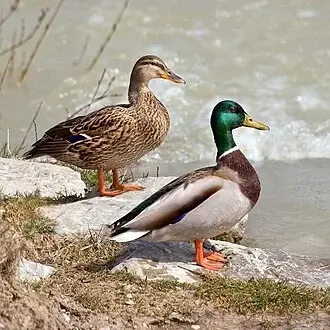
Scientific Name:Anas platyrhynchosClassification:Game SpeciesAbundance: Found statewide The mallard is a large, dabbling duck with broad wings. The male’s (drake) distinctive green head and brown chest are separated by a white neck-ring, contrasted by gray sides, a brown back, and a black rump. The female (hen) is marked in a mottled pattern of light and dark brown streaks, accented by a dark brown streak through the eye. Both male and female mallards sport a violet-blue spectrum on each wing. Mallards possess excellent eyesight and hearing, giving the duck an advantage when an intruder nears. The mallard is more vocal than all other ducks and uses a variety of quacks to indicate its actions and moods. The mallard duck is the most adaptable of all ducks and is well dispersed throughout North America.While most mallards breed on the northern prairies, many nest elsewhere, including North Carolina. Although the mallard prefers shallow wetlands for feeding and resting, it builds its nest on dry ground. During the winter months, an abundant supply of food and a safe roosting site are adequate needs for survival. Mallards feed primarily on natural foods such as wild rice, pond weed, smartweed, bulrushes, and a number of other emergent and submerged plants. When natural foods are limited or not available, mallards rely on grains such as corn, soybeans and wheat that are left in agricultural fields as the result of harvesting, or left standing to provide winter food for waterfowl. Additional Info(including license requirements, non-toxic shot requirements, baiting information and various reports) Visit the Wildlife Commission'sWaterfowl in North Carolina pagefor more information about management of canvasback ducks in North Carolina. Sandy Mush Game Land Birding Checklist (PDF)
Habitat & Range
The mallard duck is the most adaptable of all ducks and is well dispersed throughout North America.While most mallards breed on the northern prairies, many nest elsewhere, including North Carolina. Although the mallard prefers shallow wetlands for feeding and resting, it builds its nest on dry ground. During the winter months, an abundant supply of food and a safe roosting site are adequate needs for survival. Mallards feed primarily on natural foods such as wild rice, pond weed, smartweed, bulrushes, and a number of other emergent and submerged plants. When natural foods are limited or not available, mallards rely on grains such as corn, soybeans and wheat that are left in agricultural fields as the result of harvesting, or left standing to provide winter food for waterfowl.
Hunting Season
Inland Zone: Oct 16-18, Nov 8-29, Dec 19-Jan 31. Coastal Zone: Oct 24-25, Nov 8-29, Dec 18-Jan 31.
Frequently Asked Questions
Regulations for hunting Mallard in North Carolina
Mallards are managed under federal migratory bird regulations. Daily aggregate duck limit is 6, of which no more than 4 may be mallards (including no more than 2 hen mallards). Nontoxic shot required. A federal duck stamp and HIP number are required.
When is Mallard hunting season in North Carolina?
The hunting season for Mallard in North Carolina is: Inland Zone: Oct 16-18, Nov 8-29, Dec 19-Jan 31. Coastal Zone: Oct 24-25, Nov 8-29, Dec 18-Jan 31.
What is the bag limit for Mallard in North Carolina?
The bag limit for Mallard in North Carolina is: 4 mallards per day (part of 6-duck daily aggregate limit; no more than 2 hens).
What's another name for Mallard?
Mallard is also known as Mallard, Greenhead in North Carolina.
References
| State | Category | Directory | Subcategory | Content | Source |
|---|---|---|---|---|---|
| North Carolina | Hunting | Regulations | Season Dates | Inland Zone: Oct 16-18, Nov 8-29, Dec 19-Jan 31. Coastal Zone: Oct 24-25, Nov 8-29, Dec 18-Jan 31. | Link |
| North Carolina | Hunting | Regulations | Regulations | Mallards are managed under federal migratory bird regulations. Daily aggregate duck limit is 6, of which no more than 4 | Link |