Also known as: Water weasel
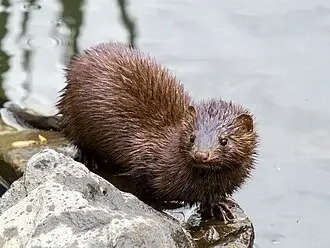
Scientific Name:Mustela visonClassification:Furbearer SpeciesAbundance:Found throughout the state;more common in coastal marshes and swamps Also known as the water weasel, the mink is often thought of as vicious. This reputation has been earned by its habit of frequently killing prey larger than itself and also killing more prey than it can eat. Mink are semi-aquatic living in a variety of wetland habitats. Historically, the mink’s handsome fur has been highly prized, though the demand for wild fur has dropped in recent years.The mink is a small mammal with a long, thin body and short, sturdy legs, a flattened head, small eyes and ears, and a pointed nose. Each foot has five toes with claws and slight webbing between each toe. The mink’s lustrous waterproof fur is generally chocolate brown to black, often with a white patch on the chin or chest. Long, furred tails are brown at the base tapering to black at the tip. Mink are very active and aggressive. They are excellent swimmers and can also climb trees. When threatened, they may growl, hiss, screech or discharge a strong, musky scent from anal glands. A contented mink will sometimes purr. Learn more reading the Mink species profile. Mink can be trapped during theregulated trapping season, or with adepredation permitoutside of the trapping season. It is illegal to relocate live mink in North Carolina (15A NCAC 10B .0106 (5)(e)). Mink trapping regulationsBest Management Practices for Trapping Mink(PDF) Because mink are primarily nocturnal, few people have had the chance to see one in the wild. Their presence is usually noticed through tracks along muddy creek edges, or in the case of damage, loss of small livestock such as chickens, ducks, or rabbits. Depredation by mink can be identified by small bite marks at the back of the head or neck, or the head or neck entirely missing. Since they are semi-aquatic, suspect mink only if there is a natural body of water close by. Other common wildlife, such as raccoons, commonly remove only the head when taking depredating chickens. As with other members of the weasel family, when excited, mink may kill for sport and leave many uneaten carcasses behind. The best way to stop or prevent damage by mink is to keep small livestock in a secured enclosure that prevents access by predators. Any openings should be smaller than one square inch, to prevent predators from reaching through to grab what they can. Mink can also be trapped during theregulated trapping season, or with adepredation permitoutside of the trapping season. It is illegal to relocate live mink in North Carolina (15A NCAC 10B .0106 (5)(e)). Visit our "Tips for Coexisting with Wildlife" webpage for more information.
Habitat & Range
Scientific Name:Mustela visonClassification:Furbearer SpeciesAbundance:Found throughout the state;more common in coastal marshes and swamps Also known as the water weasel, the mink is often thought of as vicious. This reputation has been earned by its habit of frequently killing prey larger than itself and also killing more prey than it can eat. Mink are semi-aquatic living in a variety of wetland habitats. Historically, the mink’s handsome fur has been highly prized, though the demand for wild fur has dropped in recent years.The mink is a small mammal with a long, thin body and short, sturdy legs, a flattened head, small eyes and ears, and a pointed nose. Each foot has five toes with claws and slight webbing between each toe. The mink’s lustrous waterproof fur is generally chocolate brown to black, often with a white patch on the chin or chest. Long, furred tails are brown at the base tapering to black at the tip. Mink are very active and aggressive. They are excellent swimmers and can also climb trees. When threatened, they may growl, hiss, screech or discharge a strong, musky scent from anal glands. A contented mink will sometimes purr.
Hunting Season
Trapping season only. Check current NCWRC regulations.
Frequently Asked Questions
Regulations for hunting American Mink in North Carolina
American mink may be trapped during the regulated trapping season. No bag limits. Depredation permits available outside trapping season for damage situations. Relocating live mink is illegal in North Carolina.
When is American Mink hunting season in North Carolina?
The hunting season for American Mink in North Carolina is: Trapping season only. Check current NCWRC regulations.
What is the bag limit for American Mink in North Carolina?
The bag limit for American Mink in North Carolina is: No daily or season limits (trapping).
What's another name for American Mink?
American Mink is also known as Water weasel in North Carolina.
References
| State | Category | Directory | Subcategory | Content | Source |
|---|---|---|---|---|---|
| North Carolina | Hunting | Regulations | Season Dates | Trapping season only. Check current NCWRC regulations. | Link |
| North Carolina | Hunting | Regulations | Regulations | American mink may be trapped during the regulated trapping season. No bag limits. Depredation permits available outside | Link |