Also known as: Coypu, River rat
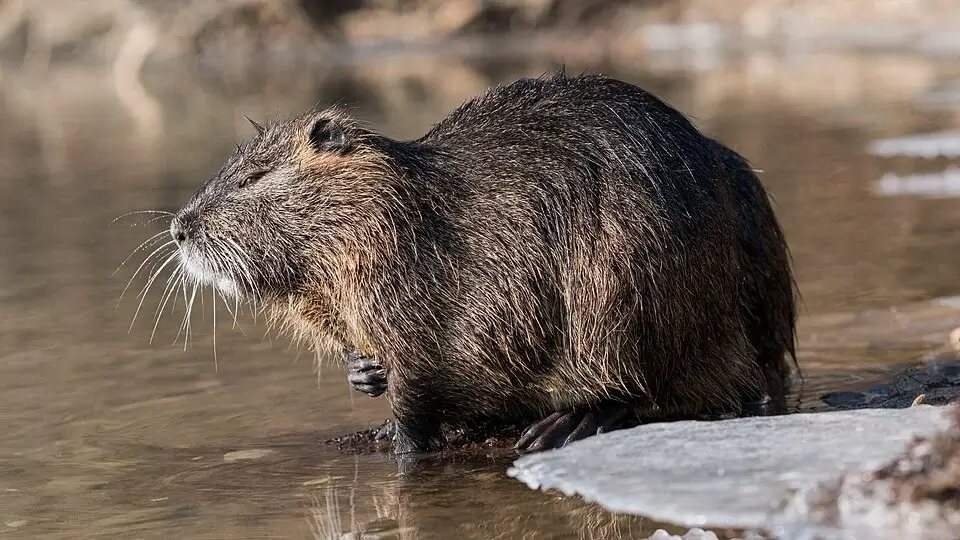
The nutria (Myocastor coypus), also known as coypu, is a large, herbivorous, semi-aquatic rodent native to South America but introduced to North America, including North Carolina, through the fur trade. Nutria have since established wild populations. Adults weigh 10-20 pounds and measure 20-25 inches in body length, with a round, sparsely-haired tail of 10-16 inches. They have bright orange incisors, webbed hind feet, and dense grayish-brown fur. Nutria are primarily nocturnal and feed on aquatic plants, roots, and agricultural crops. Their burrowing and feeding activities can cause significant damage to wetlands, levees, and agricultural lands. In North Carolina, there is no closed hunting season on private lands for nutria, and no bag limits apply.
Habitat & Range
Nutria inhabit freshwater marshes, swamps, ponds, lakes, and slow-moving rivers with abundant aquatic vegetation. They construct burrows in banks and build platforms of vegetation in marsh habitats.
Hunting Season
No closed season on private lands.
Frequently Asked Questions
Regulations for hunting Nutria in North Carolina
Nutria may be taken year-round on private lands in North Carolina with no bag limits. Trapping is also permitted. A valid hunting or trapping license is required.
When is Nutria hunting season in North Carolina?
The hunting season for Nutria in North Carolina is: No closed season on private lands.
What's another name for Nutria?
Nutria is also known as Coypu, River rat in North Carolina.
References
| State | Category | Directory | Subcategory | Content | Source |
|---|---|---|---|---|---|
| North Carolina | Hunting | Regulations | Season Dates | No closed season on private lands. | Link |
| North Carolina | Hunting | Regulations | Regulations | Nutria may be taken year-round on private lands in North Carolina with no bag limits. Trapping is also permitted. A vali | Link |