Also known as: Red fox, Cross fox, Silver fox
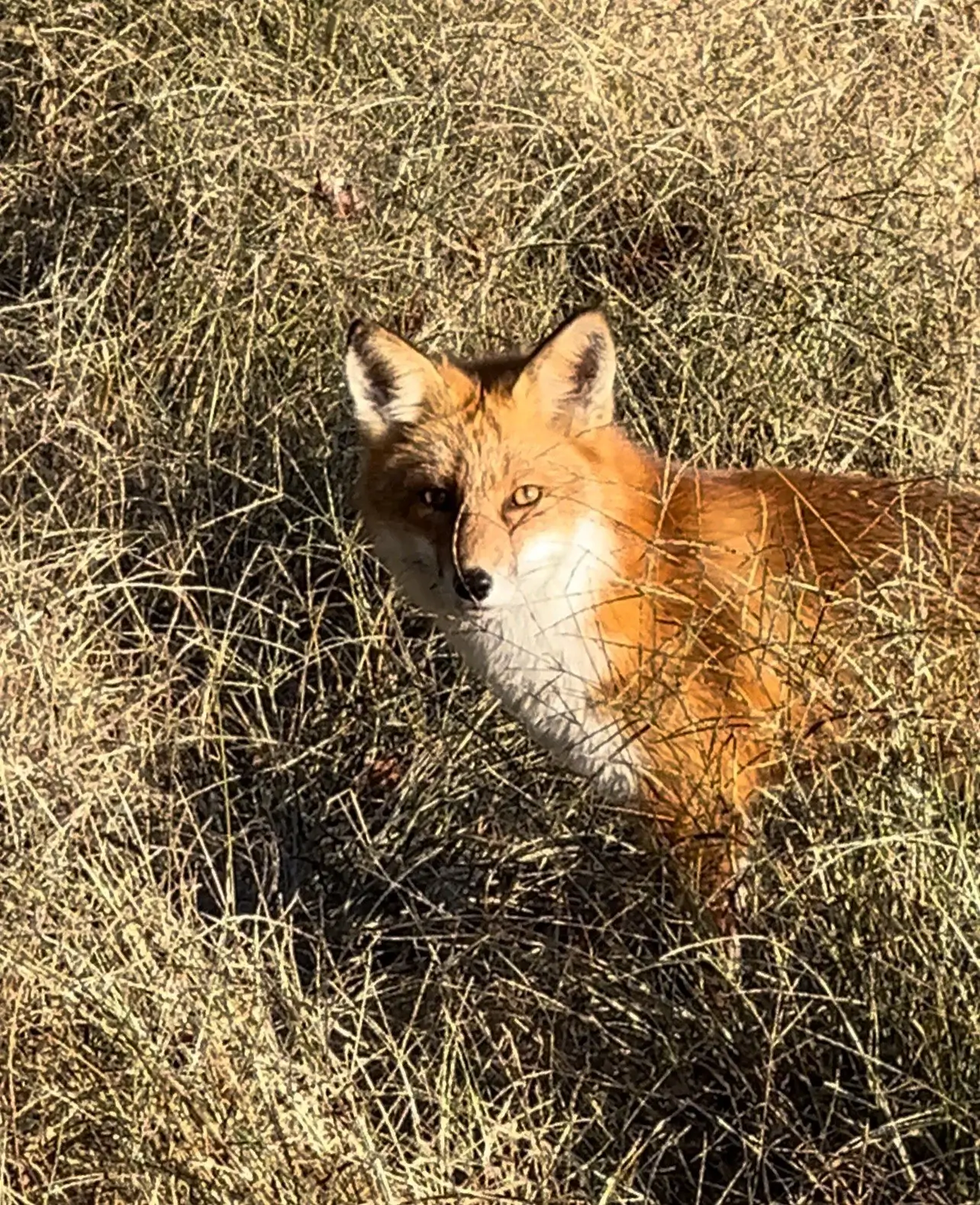
Scientific Name:Vulpes vulpesClassification:Game SpeciesAbundance:Common throughout state The red fox is the one of two types of foxes found in North Carolina. The other is the gray fox. The red fox is named for its reddish or orangish coloration. The tail, body and top of the head are all some shade of yellow-orange to reddish-orange. The undersides are light, and the tips of the ears and lower legs are black. While rare in North Carolina, red foxes can occur in other color variations, such as black, silver, or a cross between red and silver, commonly known as a “cross fox.” The tail is long (about 70 percent as long as the head and body length), bushy and has a white tip. Adults are the size of a small dog and weigh from 7.7 to 15.4 pounds. Red foxes, like other wildlife species, prefer a diversity of habitats rather than large tracts of one habitat type. Preferred habitats include farmland, pastures, brushy fields and open forest stands. They frequently hunt the edges of these open habitats. The red fox forages on a variety of prey, but mice, meadow voles and rabbits form the bulk of its diet. It will eat insects, birds, eggs, fruits and berries in spring, summer and fall. Since the red fox is also a scavenger, it may also eat carrion and garbage in some locations. The red fox is considered a game species. Gray and red foxes may only be trapped where provided by state or local law. For more information about fox trapping seasons, visitncwildlife.gov/FoxSeasons. Controlled Hunting Preserve Operator License - Fox The red fox is economically important as a predator and furbearer. Its appetite for mice and woodchucks greatly benefits farmers, and its pelt is valuable for making coats, hats, and other warm clothing. Foxes are shy and non-aggressive animals. Red foxes are primarily nocturnal, but it is not unusual to see one during the day. Daytime sightings are not necessarily a sign that a fox is diseased. Rather, they are responding to the abundance of food available during the day. The presence of red foxes in neighborhoods is not unusual. As with other wildlife, red foxes are adapting to changes in habitat. Residential areas can provide food sources and hiding/denning cover (i.e. ornamental shrubs, crawl spaces). Red foxes will take advantage of a wide spectrum of food (fruit, vegetation, pet food, garbage, small prey) often found in neighborhoods. Red foxes can become habituated to humans if easy access to food exists. To avoid conflicts, people should keep neighborhoods clean of garbage, pet food, and bird food. Leaving pet food outside may attract red foxes, as well as coyotes, raccoons, opossums and skunks. Not only will this cause them to become habituated, but the high concentration of wild animals may result in outbreaks of fatal diseases such as rabies or canine distemper. Fox and Coyote Populations Study Final Report - April 1, 2012(PDF) Fox and Coyote Management Situation Assessment - March 1, 2019(PDF) Deer Hunter Observation Survey Results, 2014-2022(PDF) Controlled Hunting Preserve Operator License - Fox
Habitat & Range
The red fox is the one of two types of foxes found in North Carolina. The other is the gray fox. The red fox is named for its reddish or orangish coloration. The tail, body and top of the head are all some shade of yellow-orange to reddish-orange. The undersides are light, and the tips of the ears and lower legs are black. Red foxes, like other wildlife species, prefer a diversity of habitats rather than large tracts of one habitat type. Preferred habitats include farmland, pastures, brushy fields and open forest stands. They frequently hunt the edges of these open habitats. The presence of red foxes in neighborhoods is not unusual. As with other wildlife, red foxes are adapting to changes in habitat. Residential areas can provide food sources and hiding/denning cover (i.e. ornamental shrubs, crawl spaces). Red foxes will take advantage of a wide spectrum of food (fruit, vegetation, pet food, garbage, small prey) often found in neighborhoods.
Hunting Season
Nov 22, 2025 – Jan 1, 2026 (east of I-77 area, firearms only in Caldwell County). Jan 3-24, 2026 (Clay, Graham, Henderson, Macon, Tyrrell counties, fox tags required). Year-round with dogs only.
Frequently Asked Questions
Regulations for hunting Red Fox in North Carolina
Red fox hunting is regulated with specific seasons depending on location and method. East of I-77 plus Mitchell and Caldwell counties: Nov 22-Jan 1, daily limit 2, season 10. Select mountain counties: Jan 3-24 with fox tags. Dogs-only hunting is allowed year-round with no limits. A valid hunting license is required.
When is Red Fox hunting season in North Carolina?
The hunting season for Red Fox in North Carolina is: Nov 22, 2025 – Jan 1, 2026 (east of I-77 area, firearms only in Caldwell County). Jan 3-24, 2026 (Clay, Graham, Henderson, Macon, Tyrrell counties, fox tags required). Year-round with dogs only.
What is the bag limit for Red Fox in North Carolina?
The bag limit for Red Fox in North Carolina is: 2 per day. Season limit: 10. No limits when taken with dogs only.
What's another name for Red Fox?
Red Fox is also known as Red fox, Cross fox, Silver fox in North Carolina.
References
| State | Category | Directory | Subcategory | Content | Source |
|---|---|---|---|---|---|
| North Carolina | Hunting | Regulations | Season Dates | Nov 22, 2025 – Jan 1, 2026 (east of I-77 area, firearms only in Caldwell County). Jan 3-24, 2026 (Clay, Graham, Henderso | Link |
| North Carolina | Hunting | Regulations | Regulations | Red fox hunting is regulated with specific seasons depending on location and method. East of I-77 plus Mitchell and Cald | Link |