Also known as: River otter, North American river otter
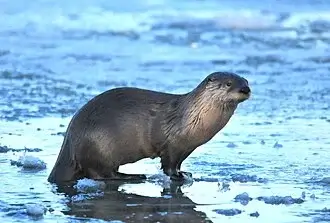
The North American river otter (Lontra canadensis), also known as the northern river otter and river otter, is a semiaquatic mammal that is endemic to the North American continent throughout most of Canada and along the coasts of the United States and its inland waterways. An adult North American river otter can weigh between 5 and 14 kilograms (11–31 lb). The river otter is protected and insulated by a thick, water-repellent coat of fur.
The North American river otter, a member of the subfamily Lutrinae in the weasel family (Mustelidae), is equally versatile in the water and on land. It establishes a burrow close to the water's edge in river, lake, swamp, coastal shoreline, tidal flat, or estuary ecosystems. The den typically has many tunnel openings, one of which generally allows the otter to enter and exit the body of water. Females give birth in these burrows, producing litters of one to six young.
North American river otters, like most predators, prey upon the most readily accessible species. Fish is a favored food among the otters, but they also consume various amphibians (such as salamanders and frogs), freshwater clams, mussels, snails, small turtles, and crayfish. The most common fish consumed are perch, suckers, and catfish. Occasional reports also show the river otter eating other small animals, such as mice, squirrels, birds, and even dogs that they have attacked and drowned.
The range of the North American river otter has been significantly reduced by habitat loss, beginning with the European colonization of the Americas. In some regions, though, their population is controlled to allow the trapping and harvesting of otters for their fur. North American river otters are very susceptible to the effects of environmental pollution, which is a likely factor in the continued decline of their numbers. A number of reintroduction projects have been initiated to help halt the reduction in their overall population.
The North American river otter has long and thin whiskers that are used to detect prey in dark waters. An average adult male weighs about 11.3 kilograms (25 lb) against the female's average of 8.3 kg (18 lb). Its body length ranges from 66 to 107 cm (26–42 in). About one-third of the animal's total length consists of a long, tapered tail. Tail lengths range from 30 to 50 cm (12–20 in). Large males can exceed a weight of 15 kg (33 lb). It differs from the Eurasian otter by its longer neck, narrower visage, the smaller space between the ears, and shorter tail.
Males and female river otters show different nonsexual physical characteristics, with males typically being larger.
North American river otters can live 21–25 years in captivity, or 8–13 years in the wild.
Habitat & Range
The North American river otter is found throughout North America, inhabiting inland waterways and coastal areas in Canada, the Pacific Northwest, the Atlantic states, and states on the Gulf of Mexico. They also inhabit the forested regions near the Pacific coast in North America. The species is also present throughout Alaska, including the Aleutian Islands, and the north slope of the Brooks Range.
Urbanization and pollution, though, have resulted in a reduction in the otters' range in the United States. They are now absent or rare in Arizona, Kansas, Nebraska, New Mexico, North Dakota, Ohio, Oklahoma, South Dakota, and Tennessee. Reintroduction projects have expanded their distribution in recent years, such as in West Virginia, and especially in the Midwestern United States. Since their reintroduction to Kentucky in the early 1990s, the otters have recovered to the point that a trapping season was implemented in 2006, and the species is now found in all of the state's major waterways. In 2010, the Colorado Department of Wildlife reported the river otter, reintroduced to the state in the 1980s, was "thriving" and recommended its protection status be reconsidered. In late 2012, a river otter nicknamed Sutro Sam took up residence around the former site of the Sutro Baths in San Francisco, the first river otter sighting in that city since the 1950s. North American river otters occupy all Canadian provinces and territories, except until recently, Prince Edward Island. Otters have recently begun re-establishing themselves on Prince Edward Island. In Minnesota, otter populations have rebounded due to reintroduction efforts in the 1980s, improvements in water quality, habitat restoration, and harvest regulation. While river otters are most common in northern Minnesota, they can be seen in urban areas including the Twin Cities.
Historical records indicate North American river otters were once populous throughout most major drainages in the continental United States and Canada prior to European settlement. North America's largest populations were found in areas with an abundance and diversity of aquatic habitats, such as coastal marshes, the Great Lakes region, and glaciated areas of New England. In addition, riverine habitats in interior regions supported smaller otter populations. The North American river otter existed on all parts of the Pacific Coast, including the seashore and inland streams and lakes. In Mexico, North American river otters lived in the Rio Grande and Colorado River Deltas.
Although commonly called a "river otter", the North American river otter is found in a wide variety of aquatic habitats, both freshwater and coastal marine, including lakes, rivers, inland wetlands, coastal shorelines, marshes, and estuaries. It can tolerate a great range of temperature and elevations. Aquatic life ties them almost exclusively to permanent watersheds. Their main requirements are a steady food supply and easy access to a body of water, but th
Life History
Behavior: North American river otters only settle in areas that consist of vegetation, rock piles, and sufficient coverage.
Hunting Season
Dec 26, 2025 - Feb 9, 2026 (zones 1-30). Jan 1 - Feb 9, 2026 (stocked WMAs).
Frequently Asked Questions
Regulations for hunting North American River Otter in New Jersey
River otter trapping in New Jersey requires a Special Permit ($2). Lottery application: Oct 1-31. Bag limit is 1 otter per season. The entire carcass must be surrendered. Pelt and carcass must be presented at official check station by Feb 28, 2026. Same trap restrictions as beaver on stocked WMAs.
When is North American River Otter hunting season in New Jersey?
Dec 26, 2025 - Feb 9, 2026 (zones 1-30). Jan 1 - Feb 9, 2026 (stocked WMAs).
What is the bag limit for North American River Otter in New Jersey?
1 otter per season. Max 3 otter traps per day.
What is another name for North American River Otter?
North American River Otter is also known as River otter, North American river otter in New Jersey.
References
| State | Category | Directory | Subcategory | Content | Source |
|---|---|---|---|---|---|
| New Jersey | Furbearers | Regulations | Season Dates | Dec 26, 2025 - Feb 9, 2026 (zones 1-30). Jan 1 - Feb 9, 2026 (stocked WMAs). | Link |
| New Jersey | Furbearers | Regulations | Regulations | River otter trapping in New Jersey requires a Special Permit ($2). Lottery application: Oct 1-31. Bag limit is 1 otter p | Link |